Inheritance Wars · No. 28 · Five children · Family home · Capacity · Undue influence · 14 min read
A real inheritance dispute — and the question of whether there was another way.
Inheritance Wars: Five Children — and the Will That Left Everything to One Son
Oliver v Oliver — when a widowed father changed a longstanding family inheritance plan and left one son in control, the High Court found both lack of testamentary capacity and undue influence.
Peter Causton · 24 September 2026 · 14 min read

5
Surviving children under the 1985 and 2009 family plan
1
Son named sole initial object of the 2015 discretionary trust
6+ years
From William’s death in May 2018 to judgment in September 2024
2 grounds
Lack of capacity and, alternatively, undue influence — both established
Oliver v Oliver [2024] EWHC 2289 (Ch) — High Court, Business and Property Courts in Bristol, Property, Trusts and Probate List. HHJ Paul Matthews sitting as a Judge of the High Court. Hearing 10–11 July 2024; judgment 9 September 2024.
William Oliver and his wife June had a straightforward family inheritance plan.
They had six children. Their eldest, Timothy, who had Down’s syndrome, died in 2007. Five children survived: Rodney, Andrew, Kevin, Gillian and Jane.
For years William and June’s wills broadly provided that, after the survivor of them died, their estate would pass equally between their children. They made mirror wills in 1985, and again in 2009.
Then June died. And everything changed.
Less than a year later William made another will. This time the other four surviving children were effectively excluded. The eldest son, Rodney, became executor and trustee and the only initial beneficiary of the discretionary trust holding William’s residuary estate.
When William died, his daughter Jane challenged that will. The High Court concluded that the 2015 will was invalid: William lacked testamentary capacity — and, even had he had capacity, the will was the product of Rodney’s undue influence.
Five surviving children → equal shares → mother dies → new will → one son → everything changes
The family
William and June Oliver had six children: Timothy, Rodney, Andrew, Kevin, Gillian and Jane. Timothy died in 2007, so William was survived by five children. June died on 15 October 2014. William died on 25 May 2018, aged 86.
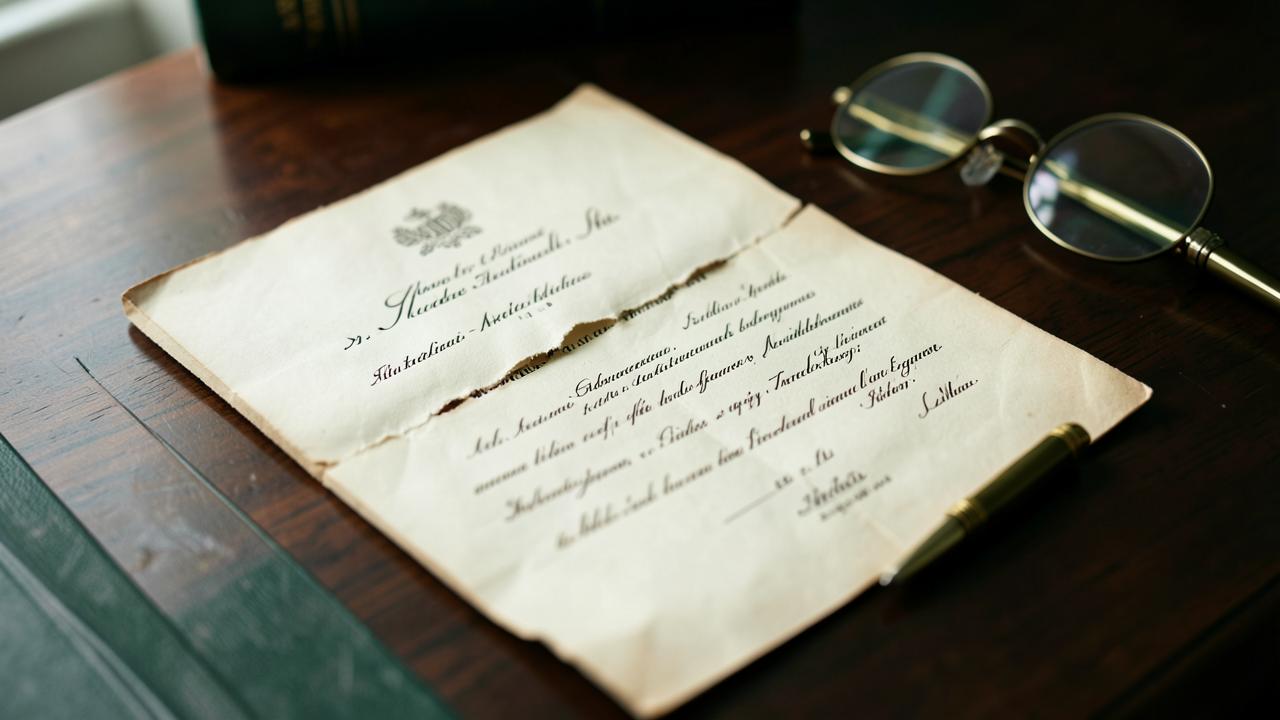
The images accompanying this article are illustrative only and do not depict the Oliver family.
The old family plan
William and June made mirror wills on 19 November 1985. Broadly, after providing for the surviving spouse, the estate was ultimately to be divided between their children.
After Timothy’s death, they made new mirror wills on 2 October 2009. Apart from Timothy no longer being included, the terms were in substance the same: equality between the five surviving children.
That matters. The 2015 will was not simply another version of the same scheme. It was a dramatic departure from it.
2009: Rodney · Andrew · Kevin · Gillian · Jane — an equal family plan. 2015: Rodney — the sole initial beneficiary.
Simplified visual explainer
A longstanding family plan — and what changed
- 1
19 November 1985 — William and June make mirror wills; ultimately, equal shares for the children
- 2
2007 — Timothy, the eldest child, dies; five children survive
- 3
2 October 2009 — new mirror wills; the equal family plan continues between five children
- 4
15 October 2014 — June dies
- 5
14 September 2015 — William’s new will: residue on discretionary trust with Rodney as the only object
- 6
25 May 2018 — William dies, aged 86
- 7
March 2023 — claims issued; trial 10–11 July 2024
- 8
9 September 2024 — 2015 will held invalid; the 2009 will is reconstituted and admitted to probate
June dies
June’s death had a profound effect on William; the judge recorded that he struggled with grief and depression. Rodney was living with William at the family home, and William became increasingly dependent on him.
The court examined evidence about William’s physical health, mental condition, memory, dependence and vulnerability. Living with, or caring for, an elderly parent is not undue influence. The court’s conclusion depended on the evidence as a whole.
The 2015 will
On 14 September 2015 William executed a new will, drafted by Stephen Haggett of H&C Lawyers in Tavistock. It placed the whole of the residuary estate on discretionary trust. Rodney was named executor and trustee, and was defined as the “primary beneficiary” — from the outset, the only object of the trust, although the trustees had power to add others.
The practical consequence was that the other four surviving children were excluded from the previous equal-sharing arrangement.
For years, five children were to share. Then one child stood to benefit.
The claim
Jane — supported by Kevin, Andrew and Gillian — challenged the 2015 will. She sought declarations that it was invalid and that the 2009 will should be admitted to probate in solemn form instead. She relied on three grounds, any one of which would be sufficient: lack of due execution under section 9 of the Wills Act 1837; lack of testamentary capacity; and undue influence (or fraudulent calumny).
Jane and Kevin also brought an alternative claim under the Inheritance (Provision for Family and Dependants) Act 1975 — on the footing that the 2015 will was valid and failed to make reasonable financial provision for them.
The absent defendant
Rodney had originally instructed solicitors, but he took no substantive part in the litigation. He did not appear at the trial and was not represented.
That did not mean the court simply accepted Jane’s case. Because undue influence was alleged — an allegation the claimant must prove — HHJ Matthews followed the usual approach and required the allegation to be tested by live evidence, rather than deciding it on written statements alone.
An undefended probate claim is not necessarily an automatic win.
Due execution
The formality ground failed. The will contained a properly drafted attestation clause and appeared regular on its face, so the presumption of due execution arose. Despite a puzzling GP note, the judge did not have sufficient evidence to rebut it, and proceeded on the basis that the will was duly executed.
Testamentary capacity
The judge held that, when he made the 2015 will, William did not have testamentary capacity. His reasons, drawn from the evidence, included:
- William was unable properly to weigh relevant information, understood matters only through the prism of Rodney’s point of view, and ceded (or attempted to cede) decision-making to Rodney.
- His stated reason for departing from equal shares — concern about Andrew’s and Kevin’s management of the family company’s assets — rested on complaints the judge found to be without foundation, which William maintained despite explanation from the company’s own accountant.
- He excluded both daughters, and did not appear to recognise that Jane had long depended on him for her accommodation.
- On the fourth limb, the judge found that the combined effect of William’s long-standing physical conditions was a significant reduction in his “executive functioning” — a disorder of the mind for these purposes — and that his false beliefs about two of his sons were fixed and could not be reasoned away.
Capacity is assessed for the particular decision at the particular time. The judge relied on expert evidence from Dr Andrew Barker alongside the lay and documentary evidence; the medical evidence alone was not treated as enough.
Undue influence
Testamentary undue influence does not simply mean persuasion, influence, closeness, dependency, or one child having more opportunity to speak to a parent. The question is whether the testator’s free will was overborne — coercion — so that the will was not genuinely his own. See Rea v Rea and Schrader v Schrader.
The court’s conclusion
This is what makes Oliver especially striking. The judge held that, even if he were wrong about capacity, William’s will was overborne by Rodney. On the evidence, he was satisfied that William was so dependent on Rodney, and so fearful of Rodney leaving him, that he could not have done otherwise than go along with Rodney’s wishes: Rodney had overpowered William’s volition without convincing his judgment.
That is a specific judicial finding on the evidence in this case. It is not a statement about children who live with or care for elderly parents.
2015 will → capacity? No → undue influence? Yes → valid? No
The 2009 will
That did not mean William died intestate. The court turned to the earlier will.
Unusually, the original 2009 will was not before the court. It was apparently in Rodney’s custody and had not been disclosed. But the evidence — including June’s corresponding mirror will — satisfied the judge that William had made it and what its terms were.
Under rule 54 of the Non-Contentious Probate Rules 1987, the court can order that a will be proved in the terms of a copy or reconstruction where the original is unavailable. HHJ Matthews ordered the 2009 will to be reconstituted, held it valid and effective, and ordered it to be admitted to probate in solemn form.
And the Inheritance Act claim?
It fell away. Jane and Kevin had brought it only on the alternative basis that the 2015 will was valid. Once that will failed and the 2009 will was restored, the claim was no longer needed.
If the 2015 will were valid → 1975 Act claim. But the 2015 will was invalid → the 2009 will restored → no 1975 Act claim required.
A court and a mediator ask different questions
The court: Did William have testamentary capacity? Was the 2015 will produced by undue influence? Was it valid? Which will governs the estate?
A mediator: What outcome does each sibling actually need? How much of the estate is at risk in litigation? Does anybody need the family home? Is equality still important? What happens if the 2015 will succeeds — and if it fails? Can the alternative Inheritance Act claims be resolved at the same time? Can the family settle without requiring findings about one another?
Hypothetical structures a contested will mediation might have explored are set out below. They are not findings or proposals made in Oliver.
Keep the old will
A later will normally revokes an earlier one. But if the later will is found invalid, an earlier valid will can become crucial. Retention, professional storage, drafting files, copies, execution records and evidence of earlier wills can all matter.
The will you replace may one day become the will the court needs.
The danger of a dramatic change
Testamentary freedom allows people to change their minds, and a dramatic change is not inherently suspicious or invalid. But where an elderly or vulnerable testator departs from a longstanding plan, good practice matters more: clear independent instructions; careful attendance notes; exploring the reasons for the change; capacity assessment where appropriate; not allowing a beneficiary to dominate instructions; and appropriate execution arrangements. See Bond v Webster, Banks v Goodfellow and Rea v Rea.
Compare Rea v Rea
In Rea, an elderly mother changed earlier arrangements, a daughter who had cared for her benefited, and her sons alleged undue influence — which was held not to have been proved. In Oliver, an elderly father changed a longstanding equal-sharing arrangement, one son became the sole initial beneficiary, and undue influence was proved.
Suspicion is not undue influence. It has to be proved.
Compare Bond v Webster
In Bond, a later will radically altered a family and business inheritance plan; the court found lack of testamentary capacity and want of knowledge and approval, and undue influence was not pursued at trial. In Oliver, the court found lack of capacity and undue influence.
Similar family fears. Different legal findings.
The will changed. The family changed with it.
For years William and June’s plan had been simple: their surviving children would share. After June died, William made a new will. The equality disappeared. One son stood to benefit; four did not.
Years later, the High Court had to decide not merely what William’s will said, but whether he had the capacity to make it and whether it truly represented his independent wishes. The answer was no. The 2015 will failed, the 2009 will returned, and the alternative Inheritance Act claim was no longer necessary.
Sometimes an inheritance war isn’t about what the will says. It is about whether it should speak for the deceased at all.
Related reading
Cases referred to & sources
- Oliver v Oliver [2024] EWHC 2289 (Ch)
- Banks v Goodfellow (1870) LR 5 QB 549
- Inheritance (Provision for Family and Dependants) Act 1975
- Non-Contentious Probate Rules 1987, rule 54
The price of the war
The published judgment does not provide a reliable final figure for the total cost of the litigation. What it does record is time: William died on 25 May 2018; the claims were issued in March 2023; the trial took place on 10–11 July 2024; and judgment was handed down on 9 September 2024 — more than six years after his death, with the estate still unadministered.
What could a mediated settlement have looked like?
These are examples of settlement structures which mediation could have explored. They are not outcomes which actually occurred, and the legal, tax and practical consequences of any settlement require appropriate professional advice.
Restoring something close to equality
An agreed division approximating the earlier equal-sharing plan, without the need for findings about capacity or conduct.
Shares reflecting particular circumstances
Differing shares recognising, for example, a sibling’s housing needs or care given, alongside a property transfer or a sale and division of proceeds.
Resolving the 1975 Act claims together
Settling the alternative Inheritance Act claims at the same time, so that the outcome did not depend on which will ultimately prevailed.
Costs and mutual releases
An agreed costs arrangement and mutual releases. If the allegations required an authoritative answer, a court decision might still have been necessary.
Inheritance Wars
Four questions
- What did the court have to decide?
- Whether William’s 2015 will was valid, including whether he had testamentary capacity and whether the will resulted from undue influence.
- What did the parties risk?
- An all-or-nothing dispute over which testamentary scheme governed the estate, serious findings concerning family conduct, years of litigation and potentially substantial costs.
- What could mediation have done differently?
- It could have allowed the siblings to consider the financial consequences of both wills and the alternative Inheritance Act claims together, and explore whether the estate could be divided without judicial findings on every allegation.
- What should families and advisers learn?
- A dramatic late change to a longstanding family plan is not automatically invalid. But where capacity, vulnerability, dependency and beneficiary involvement are present, careful independent evidence of the testator’s wishes can become critical.
Inheritance Wars
Real cases. Real families. Real consequences.
The court can decide who is right. Mediation asks whether there is another way.
Is your dispute beginning to look like an inheritance war?
Inheritance disputes often become harder to resolve as costs increase, positions become entrenched and family relationships deteriorate.
Mediation provides an opportunity to explore settlement before the outcome is left entirely to the court.
ProMediate Inheritance, Probate & Trusts provides specialist mediation for disputes involving wills, estates, trusts, inheritance and family property.
Mediation is voluntary and confidential, subject to the mediation agreement and applicable legal exceptions. The mediator is neutral, does not decide who is right and does not provide legal advice. This article provides general information about mediation and the reported decisions referred to above. It does not constitute legal advice.
© 2026 ProMediate (UK) Limited. All rights reserved.
This article may not be reproduced, republished or substantially copied without the prior written permission of ProMediate (UK) Limited. Short quotations may be used for legitimate commentary or citation provided that ProMediate is clearly credited as the source.