Inheritance Wars · No. 29 · Family farm · Proprietary estoppel · Deed of variation · 13 min read
A real inheritance dispute — and the question of whether there was another way.
Inheritance Wars: “Don’t You Trust Your Father?” — The Farm Promise That Lasted 35 Years
Armstrong v Armstrong — when a son built his working life around the promise that he would inherit the family farm, gave up an inheritance worth well over £1 million, and then discovered that his father had changed his will.
Peter Causton · 24 September 2026 · 13 min read
35+ years
Promises that Richard would inherit North Cowton, from about 1983 to 2019
> £1m
Value surrendered under the deed of variation — “well in excess of £1 million”
£2.365m
Estimated value of Allerton Grange, the family’s other farm
6 days
Length of the High Court trial in July 2024
Armstrong v Armstrong & Anor [2024] EWHC 2989 (Ch) — Andrew Sutcliffe KC sitting as a Judge of the High Court. Judgment: 22 November 2024.
For more than three decades, Richard Armstrong believed he knew what would happen when his parents died.
He would inherit North Cowton Farm. His brother Simon would inherit the family’s other farm, Allerton Grange.
Richard built his working life around that understanding. He went to agricultural college rather than university. He worked at North Cowton for decades. He lived there with his family and ran the farming business.
And, crucially, after his mother died, he agreed to give up a substantial inheritance from her estate.
Then his father changed his will. Richard was left with nothing.
The resulting family dispute eventually reached the High Court. And it raises a particularly important question for inheritance mediation:
When does a parent’s promise become something the law will actually enforce?
Two farms and five children
Alan and Margaret Armstrong had five children: David, Christine, Richard, Kathryn and Simon.
They were a farming family, although Alan and Margaret had not themselves inherited farms. During their marriage they acquired two.
One was Allerton Grange Farm at Knaresborough, comprising a farmhouse, cottage, farm buildings and 122 acres. By the time of the litigation its estimated value was £2.365 million.
The other was North Cowton Farm, where Richard lived and worked.
Richard’s case was that the family plan had been clear for decades: North Cowton would eventually be his, and Allerton Grange would eventually go to Simon. The judge accepted that Richard had been given repeated assurances to that effect.
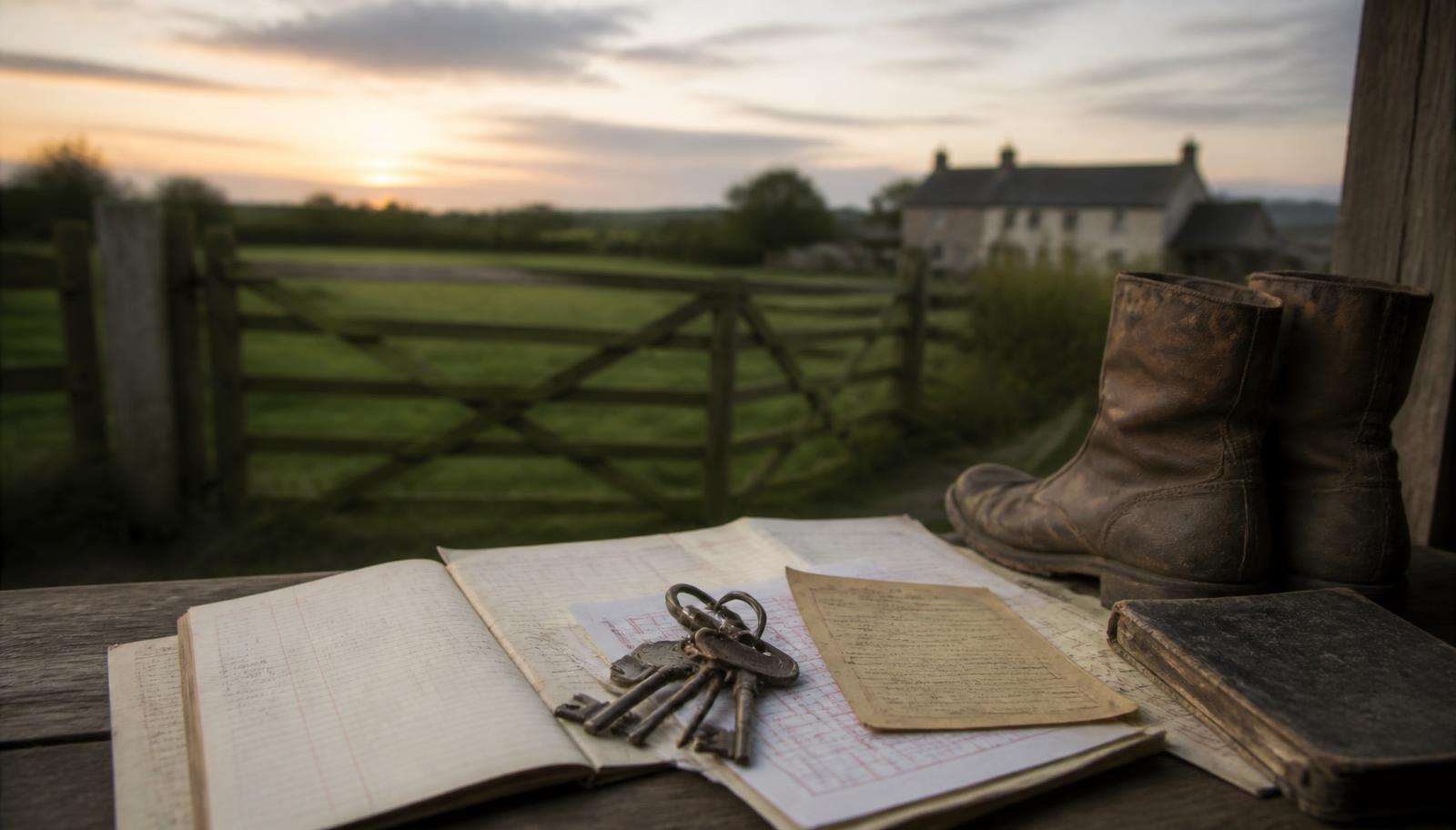
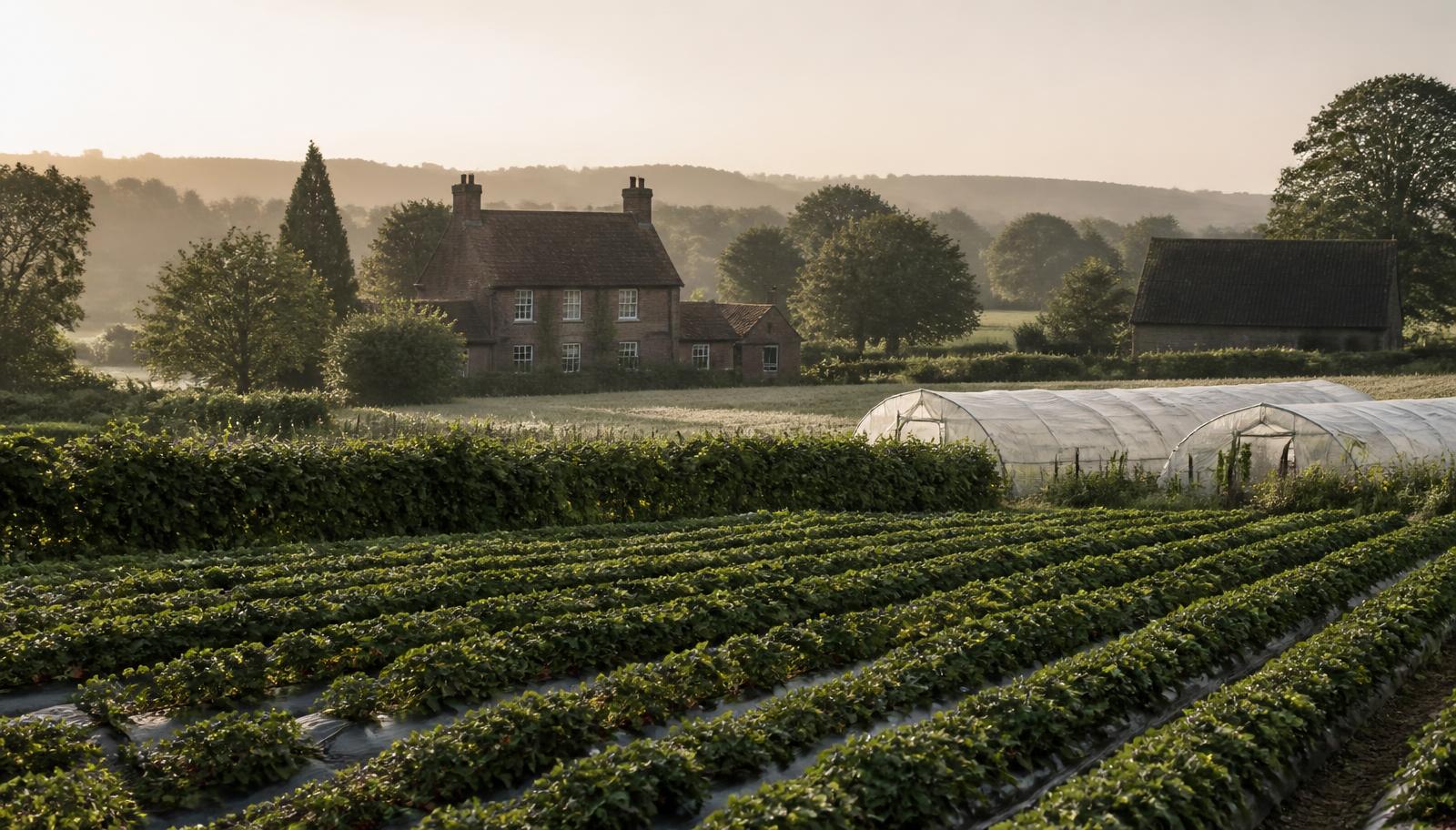
The images accompanying this article are editorial illustrations and do not depict the Armstrong family or their farms.
“An heir and a spare”
The promises went back to around 1983.
Richard had achieved A-levels in maths, physics and chemistry and said that he could have gone to university to study engineering. Instead, influenced by the expectation that he would eventually inherit North Cowton, he attended agricultural college and committed his working life to farming.
The judge accepted that Alan and Margaret made repeated promises over more than three decades that Richard would inherit North Cowton.
There were some memorable moments. After Richard had children, Alan referred to him as now having “an heir and a spare” — understood as a reference to Richard’s children eventually inheriting North Cowton from him.
In around 2010, Margaret read Richard the terms of her will and told him that Alan had made a mirror will. For Richard, the family promise appeared to have become a testamentary plan.
Simplified visual explainer
A promise over 35 years — and a will changed in months
- 1
c. 1983 — Richard chooses agricultural college rather than engineering; promises of North Cowton begin
- 2
c. 2010 — Margaret reads Richard her will and tells him Alan has made a mirror will
- 3
26 September 2018 — Margaret dies
- 4
April 2019 — the family executes a deed of variation; Richard asks whether to sign and is asked “Don’t you trust your father?”
- 5
January 2020 — Alan makes a new will with no provision for Richard
- 6
5 October 2020 — Alan dies, aged 85
- 7
July 2024 — six-day High Court trial
- 8
22 November 2024 — proprietary estoppel established; remedy left for a further hearing
Then his mother died
Margaret died on 26 September 2018. What happened next became particularly important.
Under Margaret’s estate arrangements, Richard had a substantial inheritance. But in April 2019 the family met to execute a deed of variation.
The intention, as the judge subsequently found, was not to deprive Richard and Simon of their respective inheritances. The family was proceeding on the basis that Richard would ultimately receive North Cowton and Simon would receive Allerton Grange from Alan.
Richard hesitated before signing. The judge accepted evidence that the professional adviser present asked him words to the effect:
“Don’t you trust your father?”
Alan gave Richard an encouraging look or nod. Richard signed.
The financial significance was enormous. The precise value surrendered was disputed, but the judge concluded that what Richard had given up from his mother’s estate was worth well in excess of £1 million.
Richard had trusted his father.
Then the will changed
On 5 October 2020 Alan Armstrong died aged 85. Before his death he had made a new will in January 2020.
Richard did not inherit North Cowton. Instead, the new will left the farm elsewhere and made no provision for him. The promise upon which Richard said he had structured much of his adult life had apparently disappeared.
So Richard went to court.
The legal question
Was there really a promise?
Yes. The judge accepted Richard’s evidence that his parents had made sufficiently clear promises and assurances over many years that he would inherit North Cowton.
They were not merely casual statements of current intention. They were assurances which Richard could reasonably understand he was entitled to rely upon. The court found that those assurances extended over more than 35 years, from approximately 1983 to 2019.
Did Richard rely upon them?
Again, yes. Richard had devoted his working life to North Cowton. The court accepted that he had chosen agricultural college rather than pursuing the potentially more lucrative engineering career that had been open to him. He worked the farm for decades. He and his family lived there.
The judge found that Richard had suffered substantial net detriment through spending his working life at North Cowton in the expectation that he would inherit it.
But there was something even more concrete: the deed of variation. Richard had surrendered assets from his mother’s estate worth well in excess of £1 million — in circumstances where the court found he reasonably understood that his father’s will would deliver the promised farm.
Was it unconscionable for Alan to change his mind?
The court concluded that it was. Andrew Sutcliffe KC found that Alan had repudiated Richard’s reasonable expectation when he made the January 2020 will. Given the promises made over more than 35 years, the judge described Alan’s decision as “plainly unconscionable”.
Richard therefore succeeded in his proprietary estoppel claim. The question of the appropriate remedy was left for a further hearing.
The alternative Inheritance Act claim
Richard also claimed reasonable financial provision from his father’s estate under the Inheritance (Provision for Family and Dependants) Act 1975, in case his proprietary estoppel case failed.
The court found that Richard had been financially dependent upon Alan: working at North Cowton provided his income and living in its farmhouse provided his housing. But the 1975 Act claim was alternative to the proprietary estoppel case, and Richard had already succeeded on the more fundamental proposition:
His father’s promise mattered in law.
“Don’t you trust your father?”
There is another reason this case belongs in Inheritance Wars.
Inheritance disputes often depend upon informal family arrangements precisely because families do trust one another. People do not necessarily document promises made around a kitchen table. Children work in family businesses without conventional employment arrangements. Parents say that a house, farm or business will eventually be theirs. Nobody sees a reason to put it in writing because everybody knows what is supposed to happen.
Until somebody dies.
Richard’s hesitation over the deed of variation was met with what became an extraordinary question. He did trust his father. Years later, the High Court had to reconstruct what that trust had meant.
A court and a mediator ask different questions
The court: Were sufficiently clear promises made? Did Richard reasonably rely upon them? Did he suffer detriment? Was it unconscionable for Alan to go back on those promises? What equitable remedy should follow?
The mediator: Does Richard need the farm or its value? Can the farming businesses continue? Can the land be divided? What do the other beneficiaries need? Can one branch of the family compensate another? How much family wealth will litigation consume? Can the next generation avoid inheriting the dispute as well as the property?
By the time the case reached trial, family members were giving evidence against one another about conversations stretching back decades. Examples of the matters a mediation of a family property dispute might have explored are set out below. They are illustrations only, not proposals made in the Armstrong litigation.
The promise lasted 35 years. The will changed in months.
For most of Richard Armstrong’s adult life, he believed North Cowton would eventually be his. The High Court found that belief had not simply been wishful thinking. His parents had repeatedly encouraged it. He had relied upon it. He had organised his working life around it.
And, after his mother’s death, he surrendered an inheritance worth well over £1 million while continuing to trust that the family plan would be honoured.
Then his father made another will.
Richard won his proprietary estoppel claim. But by then a private family understanding about two farms had become six days of High Court evidence about promises made over more than three decades.
Perhaps the most important line in the entire story therefore isn’t found in the law of proprietary estoppel. It is the question Richard was asked before signing away his inheritance: “Don’t you trust your father?”
He did.
And that is precisely why family inheritance arrangements sometimes need more than trust.
Related reading
- Thorner v Major — the oblique farm promise
- Oliver v Oliver — five children and the will that left everything to one son
- Ilott v The Blue Cross
- How Not to Start an Inheritance War
- The Inheritance Wars hub
Authority: Armstrong v Armstrong & Anor [2024] EWHC 2989 (Ch), Andrew Sutcliffe KC sitting as a Judge of the High Court, judgment 22 November 2024.
Cases referred to & sources
The price of the war
Alan died on 5 October 2020. The litigation required a six-day High Court trial in July 2024, followed by further written submissions, and judgment on 22 November 2024. Even then it was not necessarily finished: the court expressly left the appropriate remedy for a further hearing. The published judgment does not provide a reliable final figure for the total cost of the litigation, and none should be inferred.
What could a mediated settlement have looked like?
These are examples of settlement structures which mediation could have explored. They are not outcomes which actually occurred, and the legal, tax and practical consequences of any settlement require appropriate professional advice.
The farms and the land
Ownership or transfer of North Cowton, the position at Allerton Grange, land division and occupation of the farmhouse.
The farming businesses
Farming arrangements that allow the businesses to continue, and the position of the next generation.
Balancing the beneficiaries
Equalisation payments and the competing interests of beneficiaries, with tax-efficient implementation subject to professional advice.
Costs
Agreed arrangements for litigation costs. If the parties’ accounts remained irreconcilable, a court decision might still have been necessary.
Inheritance Wars
Four questions
- What did the court have to decide?
- Whether promises made to Richard over decades that he would inherit North Cowton were sufficiently clear to found a proprietary estoppel; whether he relied upon them to his detriment; and whether it was unconscionable for Alan’s estate to resile from them.
- What did the parties risk?
- A valuable farm, housing, livelihood, competing inheritance expectations, years of family relationships and the substantial cost and uncertainty of High Court litigation.
- What could mediation have done differently?
- It could potentially have considered the two farms, the inheritance arrangements, occupation, farming businesses and competing interests together rather than reducing the dispute to whether the technical ingredients of proprietary estoppel were established.
- What should families and advisers learn?
- Family promises about inheritance can have legal consequences. If somebody is asked to devote their working life to a farm, business or property — or to surrender an existing inheritance — on the understanding that they will eventually receive an asset, leaving that arrangement undocumented creates obvious scope for a future inheritance war.
Inheritance Wars
Real cases. Real families. Real consequences.
The court can decide who is right. Mediation asks whether there is another way.
Is your dispute beginning to look like an inheritance war?
Inheritance disputes often become harder to resolve as costs increase, positions become entrenched and family relationships deteriorate.
Mediation provides an opportunity to explore settlement before the outcome is left entirely to the court.
ProMediate Inheritance, Probate & Trusts provides specialist mediation for disputes involving wills, estates, trusts, inheritance and family property.
Mediation is voluntary and confidential, subject to the mediation agreement and applicable legal exceptions. The mediator is neutral, does not decide who is right and does not provide legal advice. This article provides general information about mediation and the reported decisions referred to above. It does not constitute legal advice.
© 2026 ProMediate (UK) Limited. All rights reserved.
This article may not be reproduced, republished or substantially copied without the prior written permission of ProMediate (UK) Limited. Short quotations may be used for legitimate commentary or citation provided that ProMediate is clearly credited as the source.