Inheritance Wars · Case analysis · 9 min read
Inheritance Wars: The £5 Million Estate and a £490,000 Costs Bill
Teixeira v Moaven — when an inheritance dispute lasts 14 years and ends in indemnity costs
Peter Causton · 4 September 2026 · 9 min read

14 years
between Abbas’s death and the substantive trial
Approaching £490,000
in payments on account of costs
Inheritance disputes are sometimes about much more than money
Inheritance disputes are sometimes described as being about money. Often they are about much more: family relationships, mistrust, promises, property and decisions made at the end of somebody’s life.
Teixeira v Moaven & Ors [2026] EWHC 1215 (Ch) is a striking example.
Amir Abbas Moaven died in May 2012 aged only 44. He left a widow, Gabriela, and two young children.
Fourteen years later, his estate had still not been fully administered.
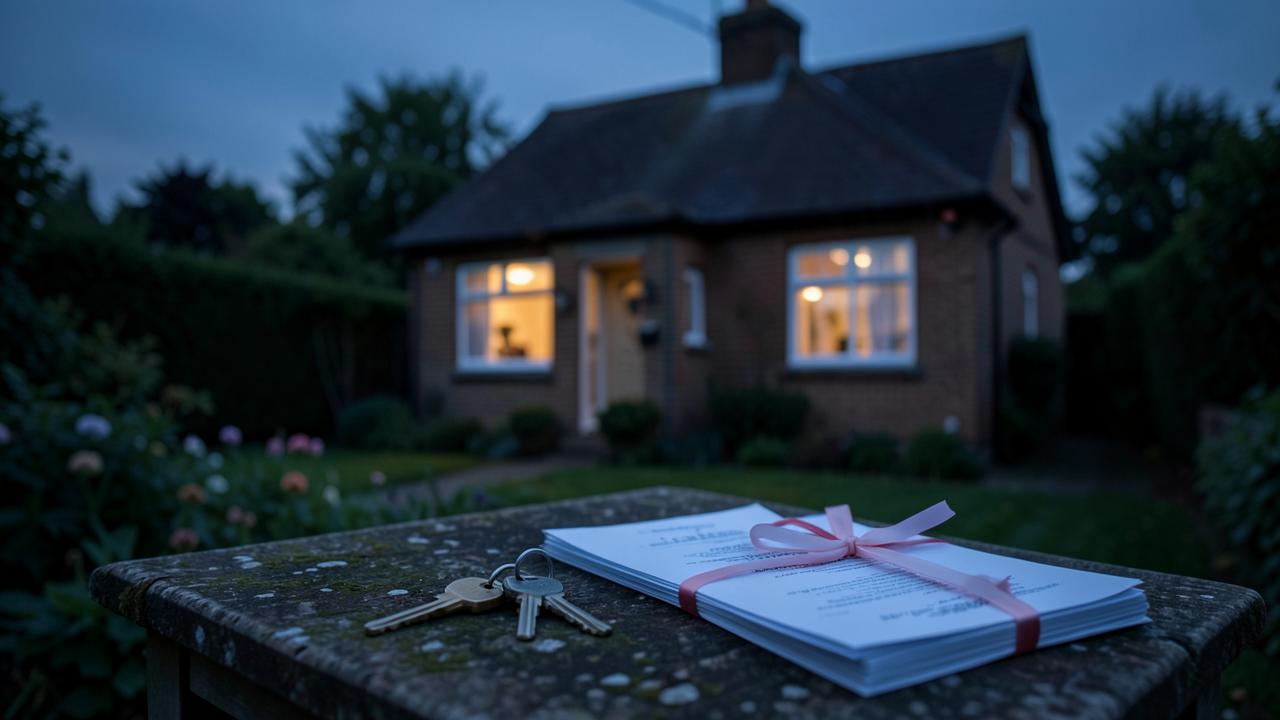
The litigation which followed concerned four valuable London properties and declarations of trust executed only weeks before his death. The court ultimately concluded that those declarations were shams.
The costs consequences were dramatic. Following the substantive judgment, indemnity costs were ordered against those whom the court found responsible for the sham arrangements. Interim payments on account of costs approached £490,000.
It is an extreme case, but it illustrates something which occurs on a smaller scale in inheritance disputes every day:
Once family litigation acquires momentum, the financial and personal cost can become enormous.
A will made weeks before death
Abbas had been diagnosed with an aggressive form of liver cancer in 2009.
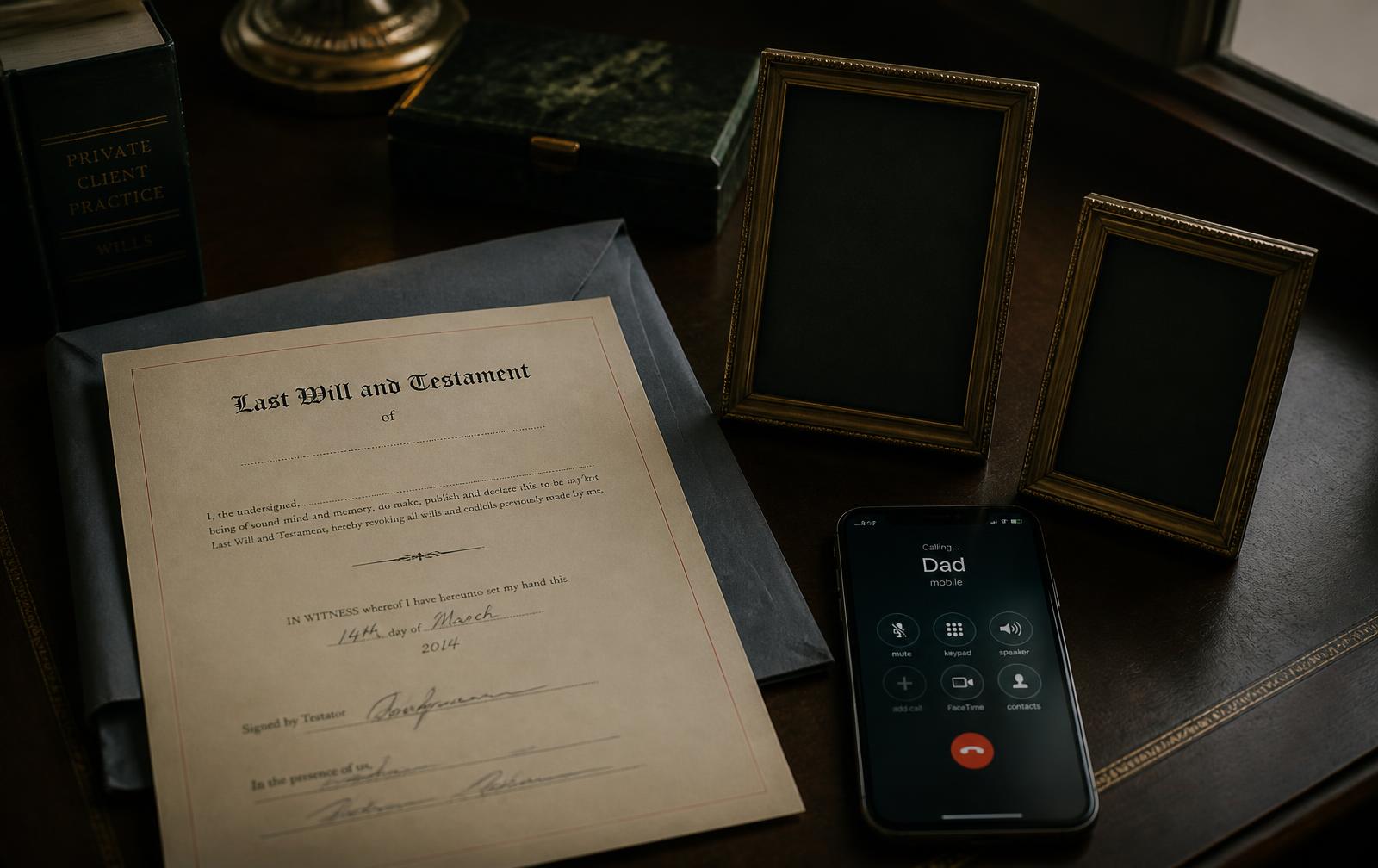
On 20 April 2012, while in hospital and close to the end of his life, he executed a will leaving his estate in equal one-third shares to his wife Gabriela and their two children, Elis and Aryan.
The children’s interests were subject to trusts until an age between 26 and 35 selected by the trustees.
Gabriela was not appointed an executor or trustee.
Instead, Abbas appointed his younger brother Amir, his long-standing accountant Behzad Faiz and conveyancing solicitor Marios Pittalis.
But there was a fundamental problem.
Who actually owned the properties?
Four properties had been purchased in Abbas’s sole name between 1996 and 2004.
Shortly before his death, however, Abbas executed declarations of trust which purported to establish that the beneficial ownership was divided between Abbas, his brother Amir and their mother.
That distinction mattered enormously.
If Abbas owned the properties outright, their full value formed part of his estate.
If the declarations of trust reflected the true position, only Abbas’s one-third interests would form part of the estate.
Indeed, the court was told that under the latter scenario, rather than containing substantial assets for the beneficiaries, the estate might potentially be insolvent.
The court therefore had to determine whether the documents reflected genuine pre-existing family ownership arrangements or whether they were shams.
The High Court’s decision
Master Bowles, sitting in retirement, rejected the case advanced in support of the declarations.
The court found that the alleged historical trust arrangements had not existed.
The declarations of trust were shams and had no legal or equitable effect.
Abbas had remained the legal and beneficial owner of the four properties.
Their full value therefore fell into his estate.
The court also considered arguments concerning section 423 of the Insolvency Act 1986 and section 10 of the Inheritance (Provision for Family and Dependants) Act 1975. Because the declarations had been found to be shams, however, it was unnecessary finally to deploy those remedies to restore the properties.
The underlying claims by Gabriela and the children for financial provision from the estate were not finally determined by this trial.
Fourteen years without a completed administration
Perhaps the most striking feature of the judgment is the chronology.
- Abbas died in 2012.
- Proceedings began in 2016.
- The original executors were removed in 2020 and independent personal representatives appointed.
- The substantive trial took place in March 2026.
At that point there had still been no full grant of probate and the estate remained largely unadministered.
Abbas’s children, aged eight and five when their father died, had grown into adults while the dispute continued.
That is a powerful illustration of the consequences of unresolved estate litigation which cannot readily be expressed simply by calculating legal costs.
Then came the costs
The subsequent costs decision, Teixeira v Moaven & Ors [2026] EWHC 1542 (Ch), made the financial consequences particularly stark.
The court ordered indemnity costs against Amir Moaven, Mr Faiz and Mr Pittalis arising from their involvement with the sham declarations.
Pending detailed assessment, payments on account included approximately:
- £154,800 towards the costs of Gabriela and her children; and
- £318,800 towards the costs incurred by the independent administrators.
Amir was additionally responsible for approximately £17,000.
That produces an immediate costs liability approaching £490,000, even before the ultimate assessment of the costs.
The reported value of the estate, with the four properties included, has been estimated at up to approximately £5 million, although the judgment itself makes clear that the precise estate value remained unresolved because of the complicated property, debt and tax position.
Could mediation have avoided this?
It would be too simplistic to suggest that every case can be settled by mediation.
Teixeira was also an unusually serious case. The court ultimately made findings of sham documentation and dishonesty. There were issues concerning ownership of substantial property, the duties of personal representatives, tax, trusts and claims under the 1975 Act.
Sometimes a judicial determination really is necessary.
But that does not mean that opportunities for negotiated resolution should be ignored.
Inheritance and trust litigation is particularly suitable for mediation because the court is generally required to decide legal issues. A mediator can help the parties consider a much wider range of outcomes.
For example, parties may be able to explore:
- division or transfer of particular properties;
- sale of some assets while retaining others;
- lump-sum payments;
- restructuring beneficial interests;
- provision for a surviving spouse or children;
- occupation arrangements;
- tax-efficient solutions reached with appropriate professional advice;
- arrangements concerning the future administration of the estate; and
- an agreed allocation of litigation and estate costs.
A court may ultimately have to decide who owns what.
At mediation the parties can ask the rather different question:
“Is there an overall arrangement which everyone can live with?”
The cost of waiting
There is another important lesson from Teixeira.
Mediation should not necessarily be regarded as something to try shortly before trial after years of litigation costs have already accumulated.
In contentious probate and trust disputes, there may be several sensible points at which to mediate: before proceedings, after disclosure, following valuation evidence, after witness statements, or after a preliminary issue has been determined.
Sometimes determining one genuinely fundamental issue may make settlement of everything else substantially easier.
The important point is to keep the possibility of resolution under review.
Inheritance disputes are different
Inheritance litigation frequently combines sophisticated legal issues with intensely personal disagreements.
The parties may be siblings, parents, children, widows, widowers, executors, trustees and beneficiaries. Their dispute may concern events stretching back decades.
Winning the litigation may therefore come at a price which goes well beyond the lawyers’ bill.
Teixeira v Moaven is an exceptional case. But a dispute which leaves an estate substantially unadministered fourteen years after a death, while generating costs measured in hundreds of thousands of pounds, provides a powerful reminder of why inheritance disputes should be considered for mediation at an early stage.
Inheritance disputes are increasing substantially. Read our analysis of the latest probate dispute statistics.
For a family-farm dispute where promises made outside the will proved decisive, see Winter v Winter: the family farm promise that ended in court.
Cases referred to & sources
- Teixeira v Moaven & Ors [2026] EWHC 1215 (Ch)
- Teixeira v Moaven & Ors [2026] EWHC 1542 (Ch)
- Inheritance (Provision for Family and Dependants) Act 1975, section 10
- Insolvency Act 1986, section 423
Discuss an inheritance, probate or trust mediation
ProMediate Inheritance, Probate & Trusts provides specialist mediation for disputes involving wills, estates, inheritance, trusts, executors, beneficiaries and family property. Mediation can take place before or during court proceedings, online or in person.
This article provides general information about mediation and the reported decisions referred to above. It does not constitute legal advice.
© 2026 ProMediate (UK) Limited. All rights reserved.
This article may not be reproduced, republished or substantially copied without the prior written permission of ProMediate (UK) Limited. Short quotations may be used for legitimate commentary or citation provided that ProMediate is clearly credited as the source.