Inheritance Wars · Revoking a Will · Testamentary Capacity · 12 min read
Inheritance Wars: The 92-Year-Old Who Tore Up Her Will on Her Deathbed
Crew v Oakley — when destroying a piece of paper changed who inherited an £800,000 estate
Peter Causton · 4 September 2026 · 12 min read
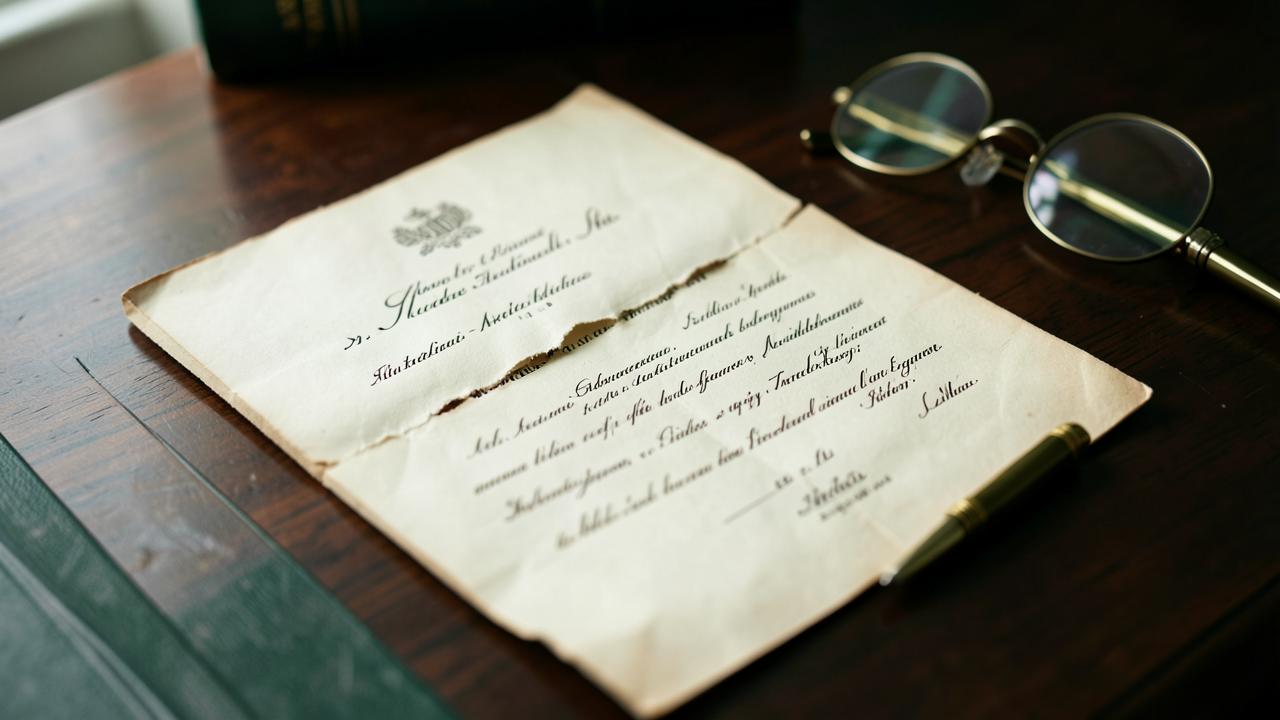
92 years old
Carry Keats’s age
£800,000
Approximate reported estate value
¾ torn
Carry began destroying the will herself
One nod
Her solicitor completed the tear at Carry’s direction
Intestacy
The result after the will was revoked
Sometimes an inheritance dispute turns on pages of complicated trust documents.
Sometimes it turns on what somebody said decades ago.
And sometimes it turns on something remarkably physical:
Did a 92-year-old woman successfully tear up her will?
That was the extraordinary question in Crew & Another v Oakley & Others [2024] EWHC 2832 (Ch).
Carry Keats was seriously ill in hospital.
She had previously made a will under which distant cousins stood to inherit much of her estate.
But family relationships had changed.
Shortly before her death, she decided that she no longer wanted that will to operate.
Her solicitor visited her in hospital.
Carry began tearing the will.
She managed to tear approximately three-quarters of the way through it.
Then she became physically unable to finish.
Her solicitor asked whether she wanted help.
Carry looked at her and nodded.
The solicitor completed the tear.
That apparently simple event determined who would inherit an estate reported to be worth approximately £800,000.
The cousins challenged what had happened.
A will can be revoked by destroying it
Most people associate changing a will with making another will.
That is certainly the conventional and usually much safer approach.
But section 20 of the Wills Act 1837 provides another method.
A will can be revoked by “burning, tearing, or otherwise destroying” it, provided this is done by the testator — or by somebody in the testator’s presence and at their direction — with the intention of revoking it.
That final requirement is crucial.
Accidentally tearing a will does not revoke it.
Throwing away a document without the necessary intention may not revoke it.
Physical destruction and the intention to revoke have to come together.
Carry’s case presented an additional complication.
She had started the destruction herself.
But she had not physically completed it.
Who was Carry Keats?
Carry was described in the evidence as an independent and strong-minded woman.
Her solicitor, Haffwen Webb, had acted for her previously and knew her personality.
Carry’s testamentary intentions had changed as family relationships changed.
In October 2020 she had indicated that she was unhappy with her sister, Josephine, and did not wish to provide for her.
But subsequently Carry fell out with members of her extended family.
A particular source of resentment concerned what Carry believed were attempts to place her into a nursing home.
Her relationship with her sister improved.
By 2021 she wanted to change the arrangements again.
This is an important feature of the case.
The decision made in hospital did not emerge from nowhere.
There was a history behind it.
The hospital visit
In January 2022, Carry was in Salisbury Hospital and seriously ill.
Her solicitor attended.
The circumstances were sufficiently urgent that the solicitor treated the matter in much the same way as dealing with a deathbed will.
Carry wanted the existing will revoked.
The solicitor explained the consequences.
One of those consequences was particularly important: if the will ceased to exist and no replacement will was made, Carry would die intestate. Her sister would therefore inherit under the intestacy rules.
Carry understood that.
Her response was telling. She indicated that their father would have been pleased.
The solicitor told Carry that, if she was determined to revoke the existing will, she could tear it up.
And so Carry did.
Three-quarters of a tear
Carry physically tore the will herself.
But she was elderly, seriously ill and weak.
She could not complete the task.
Her solicitor offered to help.
Carry made eye contact and nodded.
The solicitor finished tearing the document.
That created the central issue after Carry’s death.
Had Carry legally revoked the will?
Or had the physical act required by the Wills Act not been properly completed?
The answer mattered enormously to those who had expected to benefit under the document.
The cousins challenge the revocation
Five distant cousins stood to benefit substantially if the will remained effective.
They challenged the alleged revocation.
Their case raised two closely connected questions.
First: did Carry have the necessary mental capacity to revoke the will?
Second: had the will actually been destroyed in the manner required by section 20 of the Wills Act 1837?
Carry had not personally completed the tear.
Her solicitor had done so.
Was a nod sufficient direction?
Capacity at the moment that matters
The evidence concerning Carry’s mental state was therefore critical.
She was 92. She was seriously ill. She was receiving medication. She was in hospital shortly before death.
Those facts could understandably raise questions about capacity.
But age, illness and medication do not themselves establish incapacity.
The court had to consider Carry’s actual ability to make the relevant decision at the relevant time.
Her solicitor’s evidence became particularly important.
Mrs Webb had known Carry professionally. She recognised her personality. She understood the instructions she was giving. And she was clear that Carry knew who she was and why she was there.
The solicitor’s assessment was essentially that this was still “the same old Carry.”
The court accepted her evidence.
The importance of the solicitor
This is one of the most interesting features of the case.
The solicitor was not a beneficiary. She had no financial interest in whether the cousins or Carry’s sister inherited. She was therefore an important independent witness to what happened.
Deputy Master Linwood regarded her as convincing and honest.
He accepted that, with hindsight, aspects of the attendance note could have contained more detail. But that did not cause him to reject her account.
The solicitor was satisfied that Carry understood what she was doing and wanted the will destroyed.
The judge was satisfied too.
Was a nod enough?
The physical act is perhaps the most memorable aspect of the case.
Carry had torn most of the way through the document herself.
When she could not complete it, her solicitor asked whether she wanted assistance.
Carry looked at her and nodded.
The court regarded that as a positive communication.
It was not merely passive acquiescence.
Carry was directing the solicitor to complete what she had already started.
The requirements of section 20 were therefore satisfied.
The will had been revoked by destruction.
And the result?
There was no replacement will.
Carry therefore died intestate.
The effect was that the estate passed under the statutory intestacy rules rather than under the destroyed will.
Her sister benefited instead of the cousins who had expected to inherit under the previous testamentary arrangements.
A few inches of torn paper had changed the destination of an estate worth hundreds of thousands of pounds.
“But surely she should have made another will?”
That is perhaps the natural reaction.
And, in ordinary circumstances, making a properly executed replacement will is considerably safer than relying upon physical destruction.
But deathbed situations are not ordinary circumstances.
Time may be extremely limited. The testator may be physically weak. There may be uncertainty about how long they have left.
Crew v Oakley demonstrates that the statutory mechanism for revocation by destruction remains legally significant almost two centuries after the Wills Act 1837 was enacted.
It also demonstrates why professional evidence at the time can later become invaluable.
Intention matters
Imagine slightly different facts.
Someone angrily tears a will during an argument and later tapes it back together.
Someone accidentally damages a will.
Someone writes “cancelled” across it but does not destroy it.
Someone asks another person to destroy it when they are not present.
Someone starts tearing a document but changes their mind.
Each variation can raise different legal questions.
The law is concerned not simply with the condition of the paper. It is concerned with the combination of act and intention.
That is why apparently simple probate disputes can become surprisingly technical.
Family relationships change
There is another important lesson.
Wills are snapshots. They record somebody’s intentions at a particular moment.
But families continue changing afterwards.
People fall out. They reconcile. Children become carers. Siblings become estranged. New relationships begin. Old resentments disappear — or new ones develop.
Carry’s intentions changed as her relationships changed. The will which once reflected her wishes eventually did not.
That is why wills should be reviewed periodically, particularly after major changes in family circumstances.
Could mediation have resolved the dispute?
This case presents an interesting mediation question.
The underlying legal issue was relatively stark. Either the previous will remained effective or it had been revoked. The financial consequences followed from that.
Sometimes a judicial ruling on such an issue really is required.
But litigation still involves risk.
The cousins had to persuade a court either that Carry lacked the necessary capacity or that the statutory requirements for revocation had not been satisfied. Against them stood an independent solicitor who had actually been present.
The sister faced the opposite risk: if the challenge succeeded, the destroyed will could determine the inheritance instead.
At mediation, neither side would have needed to concede its legal position. They could instead have asked: what is the risk that the judge believes the other side?
The deceased cannot clarify matters
As with so many Inheritance Wars cases, the person whose intentions mattered most was no longer there.
Carry could not come to court and say: “Of course I wanted that will destroyed.”
Nor could the cousins cross-examine her about her relationship with them.
The court had to reconstruct her intentions from the evidence left behind.
That is one reason probate litigation is inherently risky.
The best witness is so often unavailable.
The cost of proving a point
An inheritance dispute may begin with a powerful conviction: “That can’t possibly have been what she wanted.”
But litigation requires more than conviction. It requires evidence.
It also requires parties continually to consider proportionality.
Even where the estate is substantial, litigation costs reduce the economic value of winning.
Mediation provides an opportunity to test the evidence and explore whether the risk can be priced rather than adjudicated.
Not every dispute will settle. Some need a judge.
But the decision to litigate should be made with a clear understanding of what victory may actually cost.
The lesson from Crew v Oakley
Carry Keats was 92 years old.
She was seriously ill.
She was physically unable to finish tearing a document.
None of those things prevented her from making a legally effective decision about her property.
The court found that she knew what she wanted.
She started destroying the will herself.
When she became too weak to finish, she directed her solicitor to complete the task.
The will was revoked.
The cousins lost their entitlement under it.
And the estate passed instead under the rules of intestacy.
The case is a remarkable reminder that testamentary intention can sometimes turn upon a very small act.
The legal question became: “Did that nod mean: finish tearing up my will?”
The court decided that it did.
For families considering litigation over similarly disputed final wishes, however, there is another question worth asking:
“Do we need a judge to decide this, or can we agree what happens next?”
Related reading: our practice pages on contested wills and Inheritance & Wills and Probate & Estates; Clitheroe v Bond: testamentary capacity, delusions and a disinherited daughter; the rise in probate caveats and contested probate claims; and how mediation works.
Cases referred to & sources
Discuss an inheritance, probate or trust mediation
ProMediate Inheritance, Probate & Trusts provides specialist mediation for disputes involving wills, estates, inheritance, trusts, executors, beneficiaries and family property. Mediation can take place before or during court proceedings, online or in person.
This article provides general information about mediation and the reported decisions referred to above. It does not constitute legal advice.
© 2026 ProMediate (UK) Limited. All rights reserved.
This article may not be reproduced, republished or substantially copied without the prior written permission of ProMediate (UK) Limited. Short quotations may be used for legitimate commentary or citation provided that ProMediate is clearly credited as the source.