Inheritance Wars · No. 15 · Mirror wills · Mistake · Rectification · 12 min read
Inheritance Wars: The Husband and Wife Who Signed Each Other’s Wills
Marley v Rawlings — when a simple mistake by a solicitor threatened to send an estate to the wrong beneficiaries
Peter Causton · 4 September 2026 · 12 min read
1999
Mirror wills signed
2 wills
Wrong way round
2003
Mrs Rawlings dies
2006
Mr Rawlings dies
£70,000
Approximate net disputed estate
3 court levels
High Court → Court of Appeal → Supreme Court
Result
Rectified
Mr and Mrs Rawlings knew what they wanted.
They instructed a solicitor to prepare mirror wills. Each would leave everything to the other. When the second spouse died, the estate would pass to Mr Marley.
Mr Marley had been taken in by the Rawlings as a teenager. They treated him as part of the family. He continued to live with them as an adult and cared for them in later life. The Rawlings also had two adult sons, and so the testamentary plan mattered.
The solicitor prepared the documents. The couple signed them. Two witnesses attested the signatures. Everything appeared entirely conventional.
Except for one extraordinary mistake.
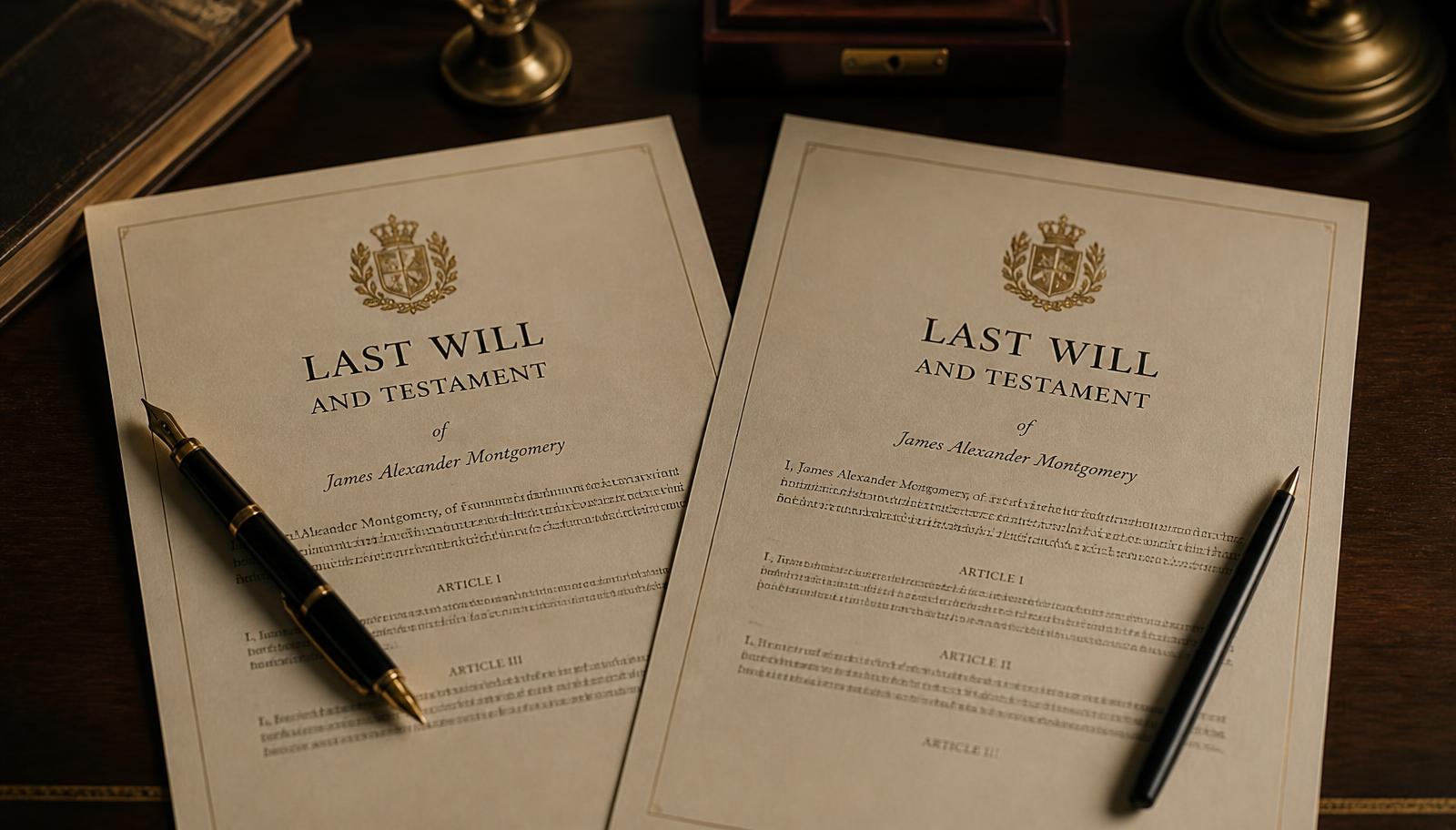
Mr Rawlings signed Mrs Rawlings’ will. Mrs Rawlings signed Mr Rawlings’ will.
Nobody noticed. And when the mistake finally came to light years later, it created a dispute which went all the way to the Supreme Court.
The family
Mr and Mrs Rawlings had two adult sons, Terry and Michael Rawlings. They also had a close relationship with Mr Marley, who had been orphaned as a teenager, after which the Rawlings brought him up and treated him as a member of their family. He continued living with them in adulthood and cared for them in old age.
The Rawlings therefore wanted their estate ultimately to pass to him. The sons would inherit instead if their father died intestate. That difference turned a clerical mistake into litigation.
The solicitor’s mistake
The solicitor drafted the mirror wills according to instructions. The problem arose not in the legal drafting but in the mechanics of execution. When the solicitor attended Mr and Mrs Rawlings on 17 May 1999, he gave each spouse the wrong will.
Mr Rawlings signed the document prepared for his wife. Mrs Rawlings signed the document prepared for her husband. The solicitor and his secretary witnessed the signatures. No one spotted the error.
| The plan | What actually happened |
|---|---|
| Mr Rawlings signs his will | Mr Rawlings signs her will |
| Mrs Rawlings signs her will | Mrs Rawlings signs his will |
One simple switch. Years of litigation.
Simplified visual explainer
One switch, three courts
- 1
1999 — correct instructions given to the solicitor
- 2
Mirror wills correctly drafted
- 3
17 May 1999 — the wrong documents are handed to the wrong spouse
- 4
Each spouse signs the will prepared for the other; the solicitor and his secretary witness the signatures
- 5
2003 — Mrs Rawlings dies; the mistake is still not discovered
- 6
August 2006 — Mr Rawlings dies and the error comes to light
- 7
High Court — rectification refused
- 8
Court of Appeal — appeal dismissed
- 9
Supreme Court — rectification allowed
The mirror wills were intended to produce the same ultimate destination whichever spouse died first.
Two deaths, and a discovery
Mrs Rawlings died in 2003. The mistake still was not discovered, and her estate passed to her husband.
Then, in August 2006, Mr Rawlings died. Only then did somebody realise that the will bearing his signature was actually the document which had been drafted for his wife.
Why did that matter?
Because if Mr Rawlings had not left a valid will capable of being rectified, he would have died intestate.
The Court of Appeal recorded that approximately £70,000 net remained in his estate. Mr Marley already received the jointly owned home by survivorship, so that property was not part of the disputed probate estate. But the approximately £70,000 created a binary inheritance question.
If the will worked, Mr Marley inherited. If it did not, the two sons inherited under intestacy.
The sons’ argument
The Rawlings sons said, in substance, that their father had not signed his will. He had signed a document which on its face purported to be his wife’s will. If that document could not operate as his valid will, he died intestate — and under the intestacy rules the sons would inherit.
That was not a dishonest or opportunistic position. It raised a genuine point of wills law which divided the courts before the case reached the Supreme Court.
Mr Marley’s argument
Mr Marley said the intention was perfectly clear. Mr Rawlings had intended to execute his own will. The solicitor had prepared the correct testamentary scheme. The only reason the signed document did not reflect that intention was that the solicitor handed him the wrong piece of paper.
Mr Marley therefore sought rectification of the document under section 20 of the Administration of Justice Act 1982.
The first courts said no
At first instance Proudman J refused rectification. The Court of Appeal also dismissed Mr Marley’s appeal.
The problem appeared to be fundamental. This was not merely a wrong name, a mistyped figure or an accidentally omitted clause. Mr Rawlings had signed an entire document prepared for somebody else. The Court of Appeal therefore held that the statutory rectification power could not save it.
Mr Marley appealed to the Supreme Court.
The Supreme Court: look at what actually went wrong
The Supreme Court unanimously allowed Mr Marley’s appeal. Lord Neuberger adopted a broad approach to the statutory concept of “clerical error”.
The key point was that the solicitor had understood the Rawlings’ testamentary intentions correctly. He had drafted the wills correctly. The mistake occurred in the routine process of arranging their execution: the wrong documents were placed in front of the wrong people. That was precisely the sort of mechanical error which the rectification jurisdiction could address.
Did Mr Rawlings intend to sign a will? Yes. Did everyone know what that will was supposed to do? Yes. Why did the signed document fail to do it? Because the solicitor handed him the wrong document.
The result
The Supreme Court held that Mr Rawlings’ will could be rectified so that it reflected the testamentary scheme he had actually intended. The result was that Mr Marley inherited. The intestacy position relied upon by the Rawlings sons did not prevail.
The £70,000 case that went to the Supreme Court
The disputed net estate was only around £70,000. Yet the dispute travelled from the High Court to the Court of Appeal and on to the Supreme Court.
Whatever the ultimate costs arrangements, the procedural history illustrates how a relatively modest estate can generate litigation wholly disproportionate to the amount actually in dispute.
How can that happen? Because inheritance cases are rarely only about arithmetic. For Mr Marley, the case concerned carrying out the Rawlings’ expressed intentions. For the sons, it concerned whether their father’s signed document legally operated as a will and, if not, their statutory inheritance. Both sides had a legal position capable of argument. Once appellate questions of principle arose, the size of the estate ceased to be the only thing driving the litigation.
The strange irony
This was not a case where the testator failed to make a will, or the will was homemade, or the instructions were unclear, or the family could not identify what the deceased wanted, or someone changed their mind on their deathbed.
Almost everything had been done properly. The Rawlings took legal advice. They made professional wills. They had clear intentions. They signed in front of witnesses.
And still ended up in the Supreme Court. Why? Because human beings make mistakes.
Sometimes an inheritance war doesn’t begin with a family feud. It begins with two documents being put in the wrong hands.
Could it happen today?
Yes. The practical safeguards may be better. Professional will-makers normally use execution procedures designed to reduce the risk of such errors, and electronic document-management systems may make version control easier.
But a will remains an unusually formal document. Wrong documents can still be executed. Pages can be omitted. Witnessing can go wrong. Names can be confused. Earlier drafts can accidentally be used. And the error may remain hidden until the one person capable of correcting it has died.
The lesson
Before a will is signed
- 1
Check the document
Make sure the will in front of you is your own will and not another person’s.
- 2
Check the names
Your name, the executors and the beneficiaries should all read correctly.
- 3
Check the principal gifts
Confirm the main dispositions match what you actually asked for.
- 4
Check the version
Confirm this is the final agreed draft and that every page belongs to the same document.
- 5
Follow the formalities
Signature and witnessing must comply with the statutory requirements. Where a solicitor is involved, they will ordinarily supervise this.
The most important document in the estate deserves more than a signature on the last page.
The lesson for professionals
This case also contains a straightforward professional lesson: execution is not merely administrative. A perfectly drafted will can fail if the wrong document is executed.
Professional systems should therefore make clear whose will is being signed, which version is final, whether every page belongs to the same document, whether the execution clause is correct, and whether the signed document is then stored safely.
What about a homemade will?
Marley is an interesting counterpoint to the usual warning about DIY wills, discussed in How Not to Start an Inheritance War: 10 Things You Can Do Before You Die.
The Rawlings did use a solicitor. The problem was not poor drafting. It was execution. The lesson is therefore not that professional wills can never go wrong. It is that good advice greatly reduces risk — but good execution matters too.
Could mediation have resolved it?
At an earlier stage the parties could have asked: What is the estate worth? What is the cost of taking this further? What is the risk at each appellate stage? What happens if either side loses? Is there a financial compromise which reflects those risks?
The bigger lesson
Marley v Rawlings is an unusual case, but its central problem is universal. A person’s wishes do not implement themselves. They have to be understood, recorded, drafted, executed, stored and ultimately interpreted. Every stage creates the possibility of error.
The Rawlings knew exactly who they wanted to inherit. It still took the Supreme Court to make it happen.
The wrong will
One husband. One wife. Two mirror wills. Two signatures. One simple administrative error.
And years later: a High Court hearing, a Court of Appeal judgment and a Supreme Court decision. The case is now a leading authority on rectification. But behind the legal principle lies something much simpler. Mr and Mrs Rawlings tried to decide what should happen to their property after death. Their intentions were clear. The paperwork went wrong.
That was enough to start an inheritance war.
A problem with the meaning or effect of a will?
ProMediate Inheritance, Probate & Trusts provides specialist mediation for disputes involving wills, probate, rectification, construction, executors, beneficiaries and competing inheritance claims. Mediation can take place before proceedings or at any stage of an inheritance dispute.
Discuss a Mediation · Meet Our Mediators
More from Inheritance Wars
- McDaniel v Talbot — the reconciled daughter and the will that was never changed
- The Fabric Land dispute — the £10 million promise by a swimming pool
- Bond v Webster — capacity, knowledge and approval
- Crew v Oakley — the 92-year-old who tore up her will
- The Inheritance Wars series
Related guide
This article provides general commentary on Marley v Rawlings [2014] UKSC 2, wills, rectification and mediation in England and Wales. It does not constitute legal advice.
Cases referred to & sources
Discuss an inheritance, probate or trust mediation
ProMediate Inheritance, Probate & Trusts provides specialist mediation for disputes involving wills, estates, inheritance, trusts, executors, beneficiaries and family property. Mediation can take place before or during court proceedings, online or in person.
This article provides general information about mediation and the reported decisions referred to above. It does not constitute legal advice.
© 2026 ProMediate (UK) Limited. All rights reserved.
This article may not be reproduced, republished or substantially copied without the prior written permission of ProMediate (UK) Limited. Short quotations may be used for legitimate commentary or citation provided that ProMediate is clearly credited as the source.