Practical guide · Dispute prevention · England and Wales · 18 min read
How Not to Start an Inheritance War: 10 Things You Can Do Before You Die
Make a will. Keep it up to date. Explain difficult decisions. And don’t leave your family to reconstruct your intentions after you have gone.
Peter Causton · 4 September 2026 · 18 min read
No will
The single most common starting point for an avoidable inheritance dispute
An old will
A will that no longer reflects the family it was written for
A surprise
The ingredient most likely to turn disappointment into suspicion
6 April 2027
Most unused pension funds and death benefits brought into the estate for Inheritance Tax
We spend a great deal of time examining inheritance disputes after somebody has died. Many of them share the same uncomfortable feature.
The dispute could have been avoided.
Most inheritance disputes begin after somebody has died. But their causes often begin years earlier.
A will was never made. An old will was never updated. A new partner arrived. A child became estranged. A family reconciled. Someone was promised the house. Someone else was promised the business. A parent became increasingly dependent upon one child. A will was changed shortly before death.
Nobody explained why.
And then the one person who could answer everybody’s questions was gone. The family is left with documents; memories; suspicions; different versions of conversations; and lawyers.
Inheritance disputes cannot always be prevented. But many can. Here are ten things worth doing if you would prefer your estate not to become the next inheritance war.
1. Make a will
This sounds obvious. It is still the most important point.
If you die without a valid will, you do not get to decide who receives your estate. The intestacy rules do. Those rules cannot know:
- which child needs help;
- whether you have become estranged from somebody;
- whether you regard a stepchild as your own;
- whether you want your unmarried partner protected;
- whether somebody has already received substantial financial help;
- whether one child should inherit the family business;
- or what you repeatedly told everybody would happen to the family home.
The law supplies a formula. It does not reconstruct your family.
If you don’t make a will, the law makes one for you.
This is particularly important for unmarried couples and blended families. Under current law in England and Wales, an unmarried cohabiting partner does not automatically inherit under the intestacy rules merely because the relationship has lasted many years.
Further reading: Unmarried Partners and Intestacy: Who Inherits — the Partner or the Children?
2. Don’t make a complicated will a DIY project
A homemade will can be legally valid. But validity is only the beginning.
A will in England and Wales must comply with the relevant execution formalities. Even where it does, a badly drafted will can create ambiguity; failed gifts; uncertainty about property; problems identifying beneficiaries; unexpected tax consequences; questions about execution; and litigation about what the deceased actually meant.
Government guidance itself recommends professional advice where a will is not straightforward, including circumstances involving an unmarried partner; potential competing family claims; second families; overseas assets; or a business.
The larger or more complicated the estate — and the greater the potential for family disagreement — the stronger the case for obtaining proper professional advice.
Saving a few hundred pounds on the will can be an expensive economy if the family later spends £100,000 arguing about it.
A solicitor-drafted will is not immune from challenge either. But it is usually far easier to defend.
3. Don’t leave it until the deathbed
One of the most effective ways of creating a contested will is to make a radically different will when the testator is very elderly; seriously ill; taking significant medication; recently diagnosed with dementia; dependent upon a beneficiary; or only days or weeks from death.
After death, disappointed beneficiaries may ask: Did Mum understand what she was signing? Did Dad know what he owned? Why did the will suddenly change? Who arranged the solicitor? Who gave the instructions? Was the beneficiary in the room? Was there pressure? Was capacity properly considered? Why was the previous will changed?
If you know you need to make or change a will:
Do it while there can be no serious question about your ability to explain why.
Those questions are the subject of much of our Inheritance Wars series — see Banks v Goodfellow, Bond v Webster, Clitheroe v Bond and the Dalton dispute.
4. Review your will when your life changes
A will is a snapshot. Your family is not.
Review your testamentary arrangements after significant changes such as marriage; divorce; separation; a new long-term relationship; births; deaths; estrangement; reconciliation; serious illness; a major change in wealth; buying or selling substantial property; starting or selling a business; or a significant change in tax law.
McDaniel v Talbot is the perfect example. Mark Talbot deliberately excluded his daughter after decades of estrangement. Then he reconciled with her. They rebuilt their relationship. But he never updated the will. After his death, the High Court eventually awarded her £123,418.47 under the Inheritance (Provision for Family and Dependants) Act 1975.
They repaired the relationship. They forgot to repair the will.
Read the case analysis: McDaniel v Talbot.
5. Tell people what you are doing
Secrecy breeds suspicion
There is no general legal requirement to tell your family what is in your will. Sometimes there may be good reasons not to disclose every detail. But secrecy can have a price.
Imagine four children believe they will inherit equally. For twenty years nobody tells them otherwise. After their father dies they discover that one child receives the house; another receives the business; and two receive comparatively little.
Even if the will is perfectly valid, the immediate reaction may be:
“Something must have happened.”
That becomes: Was Dad pressured? Did he have capacity? Who took him to the solicitor? Why didn’t he tell us? Why was the will secret? Was one sibling controlling him?
Where appropriate, a calm conversation during lifetime can prevent years of suspicion after death.
A surprise birthday present may be welcome. A surprise will often isn’t.
6. If you are doing something unexpected, explain why
Testamentary freedom means that equal treatment is not compulsory. There may be perfectly sensible reasons why children receive different amounts. One child may already have received substantial lifetime assistance. Another may have a disability. One may have worked in the family business for decades. Another may be financially secure. A child may be estranged. There may be concerns about addiction, vulnerability or financial management. A new partner may need housing.
But if the will produces an unexpected result and provides no explanation, the family will supply explanations of its own. And those explanations are rarely charitable.
| The will says | What happens next |
|---|---|
| Sarah — £500,000 | No explanation |
| James — £50,000 | The family asks: why? |
| Suspicion | |
| Solicitors | |
| Litigation |
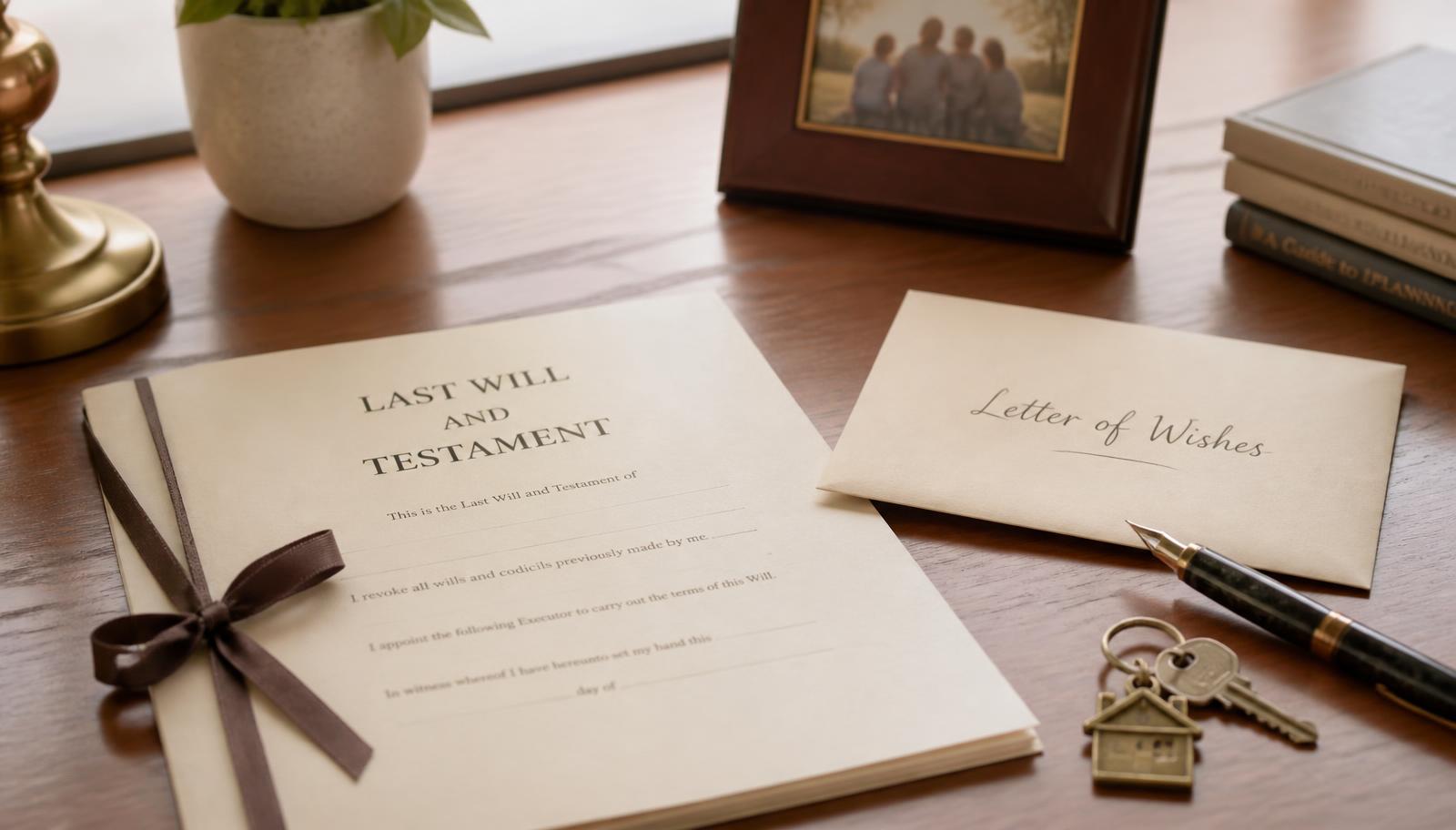
7. Consider a letter of wishes
Don’t just leave the family your decision. Where appropriate, leave them the reason.
8. Keep a proper professional record
This matters particularly where the will is unexpected; made later in life; substantially different from previous wills; or benefits somebody involved in the testator’s care.
A good contemporaneous professional file may record who arranged the appointment; who attended; the instructions given; the testator’s understanding of the estate; the family circumstances discussed; reasons for excluding or favouring beneficiaries; capacity considerations; and whether the testator was seen independently.
Years later, that file may be far more reliable than competing family memories — as the evidence in Bond v Webster illustrates.
The will writer’s file may become the most important witness in the room.
Where capacity is genuinely in question, an appropriate contemporaneous medical assessment may also be prudent. It does not automatically prove capacity, and it does not make a will immune from challenge. But it may answer, at the right moment, a question which would otherwise be argued about years later.
9. Be careful with family promises
Families say things such as: “One day this will all be yours.” “The farm will come to you.” “You’ll take over the business.” “You can live here for the rest of your life.” “Don’t worry — I’ll look after you.”
Those words may later become extremely expensive. In some circumstances, promises concerning property which are relied upon to somebody’s detriment can give rise to proprietary estoppel. In other cases, the court may conclude that no sufficiently clear promise was ever made.
Compare:
- Winter v Winter — promise established.
- The Fabric Land dispute — an alleged £10 million family-business promise not established.
If a multimillion-pound asset depends upon a family promise, don’t leave the promise beside the swimming pool. Write it down properly.
10. Look at the whole estate — not just the will
A will does not necessarily control every asset connected with somebody’s death. Depending upon the circumstances there may also be jointly owned property; pensions; life policies; trust assets; business interests; foreign property; nominated benefits; and lifetime gifts.
The arrangements should be considered together. Otherwise the apparently “fair” division under the will may produce a very different overall result.
For example: the children receive the estate under the will; the new partner receives substantial pension death benefits; and the house passes by survivorship. The legal mechanisms are different. The family, however, will usually look only at the overall result.
The pension changes are discussed further in Unmarried Partners and Intestacy.
Bonus: choose your executors carefully
The executor may have to administer the estate while family relationships are at their worst.
Think carefully before appointing siblings who cannot communicate; a new partner and a hostile adult child jointly; someone who lives abroad and cannot realistically administer the estate; or a beneficiary whose interests are likely to conflict sharply with those of other beneficiaries.
There is no universal answer. Family members can be excellent executors. In a particularly contentious family, however, a suitable independent professional executor may sometimes reduce conflict. Professional advice should be taken, because professional appointment also has cost implications.
The golden thread
Most inheritance wars begin with one of five things
- 1
No will
The intestacy rules decide instead — and they cannot know anything about your family.
- 2
An old will
A will written for a family which no longer exists in the same form.
- 3
A surprise will
Nobody expected it, so the family looks for an explanation.
- 4
An unexplained will
An unexpected result with no recorded reason invites the family to invent one.
- 5
An informal promise
“One day this will all be yours” — said casually, litigated expensively.
Clarity during life is cheaper than litigation after death.
What not to do
Don’t:
- wait until serious illness before thinking about your will;
- assume an unmarried partner automatically inherits;
- assume your children “know what you want”;
- make multimillion-pound promises casually;
- change a will dramatically without considering how the decision will later be evidenced;
- allow a principal beneficiary to dominate the will-making process;
- hide important decisions merely because discussing them is uncomfortable;
- forget to review pension nominations and other assets;
- assume an old will still reflects your current family;
- or assume that because the family gets along now, it will still get along when money is involved.
The uncomfortable conversation
Ten minutes of awkwardness can be better than ten years of litigation
Nobody particularly enjoys saying: “I want to talk about what happens when I die.” Nor is every family capable of discussing inheritance calmly.
But where it is appropriate, transparency removes one of the most powerful ingredients in inheritance litigation: surprise.
The conversation does not have to be “here is exactly how much everyone is getting”. It may simply be:
- “I have made a will.”
- “I have taken advice.”
- “I have made some decisions which are not equal.”
- “There are reasons for them.”
- “I have recorded those reasons.”
- “The will is stored safely and the executors know where it is.”
That may be enough to prevent family members constructing a completely different explanation after death.
Keep the original will safe
A beautifully drafted will is not much use if nobody can find it. Ensure that the original is stored safely and that the executors, or an appropriate family member, know where it is held. Government guidance identifies possible storage with a solicitor, a bank, a specialist storage provider or the Probate Service.
Do not place the original somewhere where it is likely to be accidentally destroyed or discarded. And do not make unauthorised handwritten alterations to an executed will: changes should be made properly, by codicil or by a new will, with the required formalities.
Simplified visual explainer
The inheritance dispute prevention plan
- 1
Make a will
- 2
Get appropriate advice
- 3
Make it while capacity is clear
- 4
Explain unusual decisions
- 5
Record the reasons
- 6
Review it when life changes
- 7
Coordinate will, property, pensions and business
- 8
Tell the right people
- 9
Store it safely
General information only. Individual circumstances differ and appropriate professional advice should be obtained when making or changing a will.
But what if it is already too late?
The death has happened. The dispute has started. Now what?
Sometimes none of this happened. There is no will. Or there are three wills. The final will was made shortly before death. One child has been excluded. A new partner says the house was promised to them. A sibling says Mum lacked capacity. Someone alleges undue influence. The executors cannot agree. Solicitors have become involved. Positions are hardening.
At that point, the objective changes. You can no longer prevent the inheritance dispute. But you may still be able to prevent it becoming an inheritance war.
Before death: communicate. Plan. Make a will. Explain it.
After death, if a dispute arises: take advice. Don’t let positions harden. Mediate early.
The best inheritance dispute is the one that never happens
The cases in our Inheritance Wars series involve different families, different fortunes and different areas of law. But again and again the same themes appear. An old will. A secret will. A deathbed will. A family promise. An estranged child. A new partner. An unexplained decision. A vulnerable parent. A business nobody properly planned to inherit. And, after death, a family trying to reconstruct conversations which took place years earlier. The rising number of probate disputes suggests those themes are becoming more common, not less.
Nobody can guarantee that their family will never argue about their estate. But there is a great deal that can be done to reduce the risk.
Make a will. Take appropriate advice. Make it in good time. Review it. Explain unusual decisions. Record your reasons. Be careful what you promise. Look at the whole financial picture. And, where appropriate:
Talk to your family while you are still here to answer their questions.
Because once you have gone, every unanswered question becomes somebody else’s evidence.
And if, despite all of that, an inheritance dispute has already begun:
Mediate before the cost of the fight becomes part of the inheritance.
Prevent an inheritance war from becoming litigation
ProMediate Inheritance, Probate & Trusts provides specialist mediation for disputes involving wills, probate, inheritance, trusts, testamentary capacity, undue influence, proprietary estoppel, family businesses, cohabiting partners, executors and beneficiaries. Mediation can take place before proceedings or at any stage of an inheritance dispute.
This article provides general information about wills, estate planning, inheritance disputes and mediation in England and Wales. It does not constitute legal, financial or tax advice. Individual circumstances differ and appropriate professional advice should be obtained when making or changing a will or other estate-planning arrangements.
Frequently asked questions
Is a homemade will valid?
A homemade will can be legally valid. A will in England and Wales must comply with the execution formalities — in broad terms it must be in writing and signed by the testator in the presence of two witnesses who then sign in the testator’s presence — and the testator must have testamentary capacity and know and approve its contents. Validity, however, is only the beginning: a badly drafted will can still produce ambiguity, failed gifts and litigation about what the deceased actually meant.
Do I have to tell my family what is in my will?
No. There is no general legal requirement to disclose the contents of your will during your lifetime, and there may sometimes be good reasons not to. But secrecy has a price: where a will produces an unexpected result and nobody knew it was coming, the family’s first reaction is often suspicion rather than acceptance.
Is a letter of wishes legally binding?
A letter of wishes is generally not legally binding in the same way as the will. It is an explanatory document. Its value lies in recording, in the testator’s own words and at the right time, why a particular decision was taken — which can be powerful evidence if that decision is later questioned.
When should I review my will?
After any significant change in family or financial circumstances: marriage, divorce, separation, a new long-term relationship, births, deaths, estrangement, reconciliation, serious illness, a substantial change in wealth, buying or selling significant property, starting or selling a business, or a significant change in tax law.
A dispute has already started — is it too late?
No. Prevention is no longer possible, but mediation can often still prevent an inheritance dispute becoming an inheritance war. Mediation can take place before proceedings are issued or at any later stage, online or in person.
Cases referred to & sources
- GOV.UK — Making a will
- GOV.UK — Make sure your will is legal
- GOV.UK — Write your will
- GOV.UK — Keeping your will safe
- HMRC — Inheritance Tax on unused pension funds and death benefits from 6 April 2027
- Primary judgments are linked through the relevant Inheritance Wars articles.
Discuss an inheritance, probate or trust mediation
ProMediate Inheritance, Probate & Trusts provides specialist mediation for disputes involving wills, estates, inheritance, trusts, executors, beneficiaries and family property. Mediation can take place before or during court proceedings, online or in person.
This article provides general information about mediation and the reported decisions referred to above. It does not constitute legal advice.
© 2026 ProMediate (UK) Limited. All rights reserved.
This article may not be reproduced, republished or substantially copied without the prior written permission of ProMediate (UK) Limited. Short quotations may be used for legitimate commentary or citation provided that ProMediate is clearly credited as the source.