Inheritance Wars · No. 25 · Ten siblings · Family home · Gold jewellery · Family money · 19 min read
A real inheritance dispute — and the question of whether there was another way.
Inheritance Wars: Ten Children, a Family Home — and a Box Full of Gold
Kaur v Kaur — when informal family loans, mortgages, jewellery and promises left ten siblings fighting over their mother's estate more than a decade after her death.
Peter Causton · 3 November 2025 · 19 min read
10
Children of Sava Singh and Raj Kaur
£24,000
Jewellery presented for valuation in 2014
~£260,000
Expected house proceeds before mortgage redemption
~£100,000
Expected amount after mortgage redemption
9 days
High Court trial in August 2025
11 years
From Raj’s death to judgment
Raj Kaur and her husband Sava Singh raised ten children in the family home in Leeds. Sava died on 18 May 2000. Raj survived him until 11 August 2014.
Shortly before her death, Raj made a will. There was no allegation that she lacked testamentary capacity, and no allegation of undue influence. The will itself was not the problem.
Money had passed between family members. The home had been remortgaged. There was gold jewellery, rent, an attempted family agreement and ten children with different memories of what their parents intended.
Mother dies → family home + mortgage + family advances + safe-deposit box + gold jewellery + rent + ten siblings → eleven years → High Court.
The family story
This was a family which had accumulated assets over many years. The family home remained emotionally significant. Raj had also accumulated a substantial amount of gold jewellery. Some she wore; much was kept in a safe-deposit box at Yorkshire Bank.
But the family’s financial affairs were not documented with the precision a court would later have liked.
Families remember conversations. Courts need evidence.
The family
Sava Singh
died 18 May 2000
↓ married to ↓
Raj Kaur
died 11 August 2014
↓
Ten children
The family
Sava Singh and Raj Kaur’s ten children
- 1
Kanta Kaur
Claimant in the proceedings.
- 2
Kouri Kaur
First defendant and former sole executor.
- 3
Lashmi Singh
One of the ten siblings.
- 4
Lakhbir Kaur
One of the ten siblings.
- 5
Sukhdev Kaur
Not to be confused with her brother Sukhdev Singh.
- 6
Sabu Singh
One of the ten siblings.
- 7
Deep Kaur
One of the ten siblings.
- 8
Sukhdev Singh
Residuary beneficiary under Raj’s will.
- 9
Thakur Singh
A named executor who later renounced.
- 10
Gurmit Kaur
One of the ten siblings.
The judgment explains that Singh and Kaur are traditional Sikh names. Several siblings therefore share those names; Sukhdev Kaur and Sukhdev Singh are different people.
The will
Raj executed her will on 16 July 2014, less than a month before she died. It appointed Kouri, Thakur and the directors of Avery & Walters Ltd as executors. Jewellery in the bank deposit box was to be divided among the siblings according to a signed list kept with the will; without one, the trustees had discretion to divide it. Furniture and household goods went to Thakur, the family home to the surviving siblings, and the residue to Sukhdev Singh.
There was no signed jewellery list.
The box of gold
On 17 July 2014, the day after making her will, Raj went to the bank. She transferred £4,600 to Kouri for funeral expenses and removed the safe-deposit box containing the bulk of her jewellery.
At the family home, the box was opened in Raj’s bedroom with Kouri, Gurmit and Thakur present. Jewellery belonging to other family members was returned. The rest was laid out on Raj’s bed. The judgment records an emotional occasion as the family discussed pieces and Raj indicated how some might be dealt with.
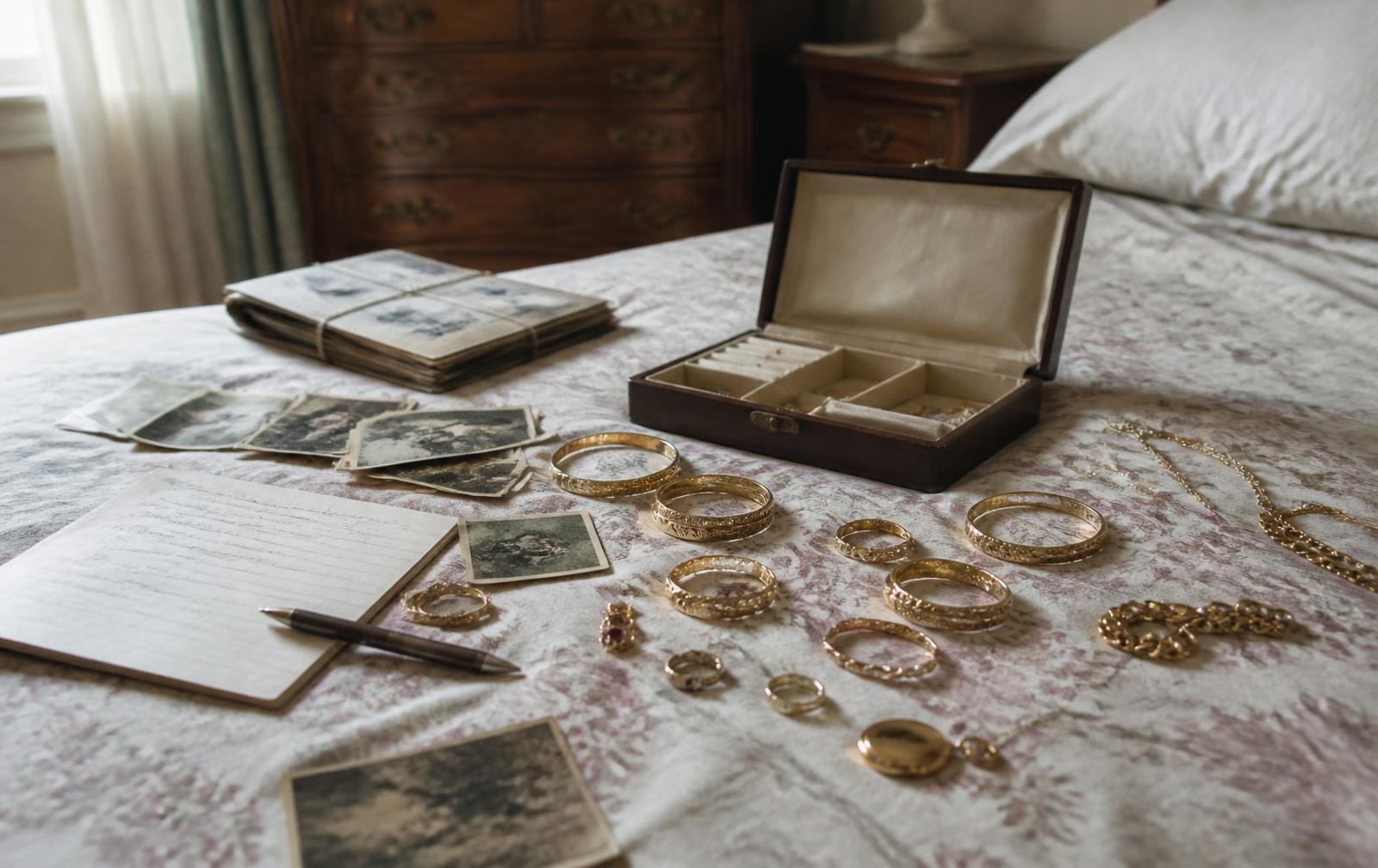
Kouri made a handwritten list of the items and some of Raj’s indications. The manuscript did not survive; a typed version was later produced. But the will required a signed list, and any list created after the box came home could not be the testamentary document contemplated by a will already executed.
Mum may have said who should have the gold. Proving exactly what she said years later was another matter.
Kouri later took the box away. Her evidence was that Raj asked her to keep it safe. After Raj died, the family disputed what had been inside and whether everything remained. Kanta alleged that Kouri had misappropriated jewellery. Kouri denied it.
The £24,000 valuation
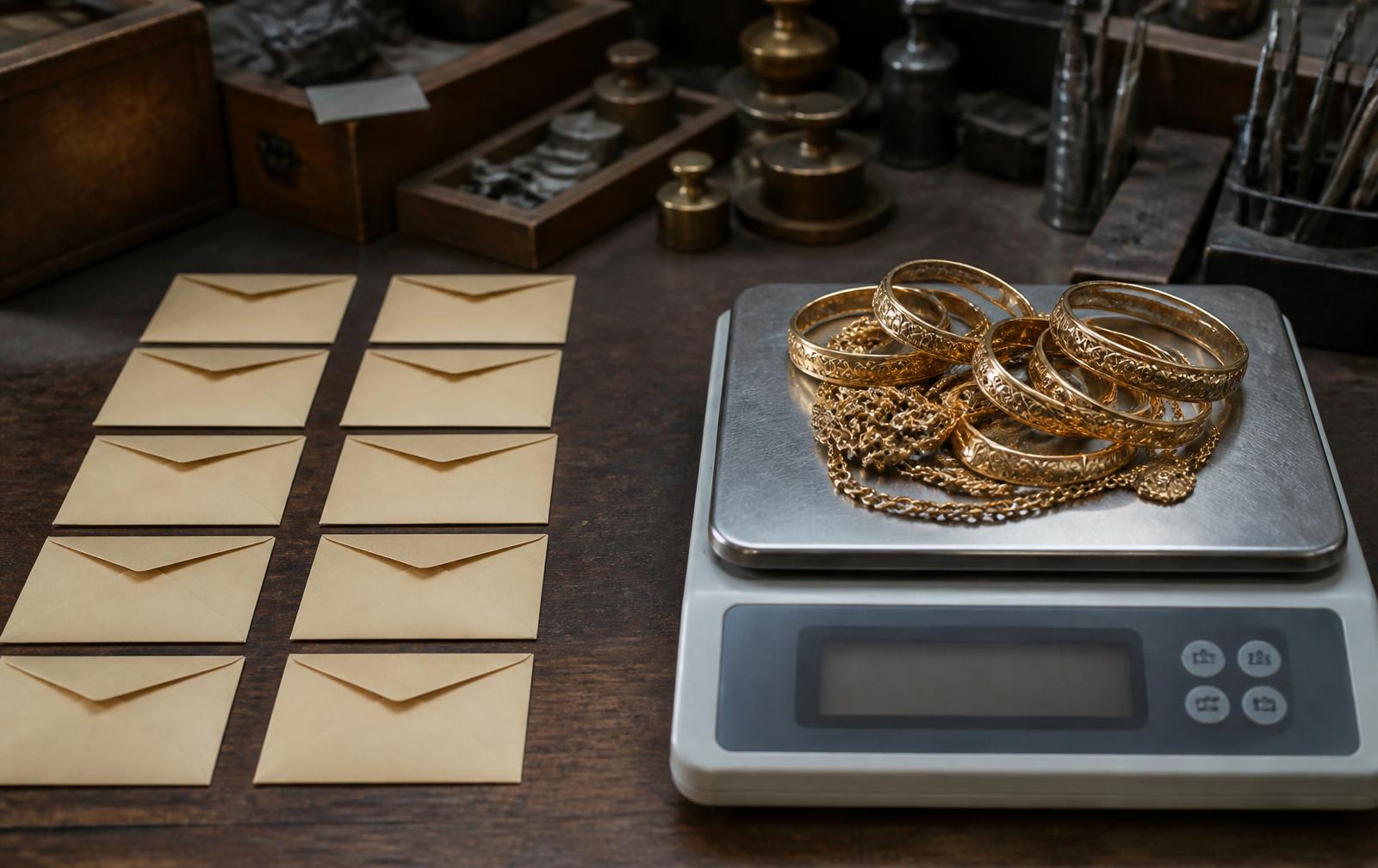
On 29 October 2014, Kouri took the gold then remaining in the box to Sanjeev Jewellers. The jewellery presented was valued at £24,000, and a detailed list was produced.
In August 2015, Kouri, Lakhbir and Deep met at a gold shop. The gold present was divided equally by value among the siblings. Some received shares directly; others were collected on their behalf. Kouri took Sabu’s share and later agreed to buy it from him.
But was gold missing?
Kanta alleged that identified pieces were absent. A Scott Schedule set out the competing claims, but the evidence had been reconstructed years later from memories, photographs and recollections of jewellery Raj had worn at a wedding.
The judge found that evidence inadequate to prove the pieces were in the box when Kouri took possession. The allegation of misappropriation failed.
Allegation: gold was missing. Evidence: memory, photographs and a reconstructed list. Proved? No.
“But I remember Mum wearing it…”
Jewellery is memorable. Families associate it with weddings, photographs, celebrations, parents and grandparents. But the question for the judge was narrower: was that particular item in the safe-deposit box at the relevant time?
Evidence that Raj had owned or worn something years earlier did not necessarily prove it remained in the box.
Memory can prove that an object mattered. It may not prove where the object was.
The mortgage
The judge said the primary source of the dispute was the mortgage. The family home had been remortgaged and money advanced for Kouri’s benefit and business. Were those sums a gift or a loan?
That mattered because the mortgage had to be redeemed before the home could be distributed. The siblings expected around £260,000 from the house, but only around £100,000 after redemption.

“Mum gave it to me.” versus “Mum expected it back.” Eleven years later, a High Court judge had to decide.
What the court decided about the money
The court held that the amounts advanced to Kouri were prima facie repayable and were not established as gifts. The starting calculation was the £150,000 Godiva mortgage principal less £22,000 used to redeem the earlier Leeds & Holbeck mortgage: £128,000.
But that was not the final amount due. Credit had to be given for payments Kouri made to Raj above mortgage interest, post-death mortgage interest Kouri paid, and £25,000 advanced to finance Thakur’s wedding. The judge described the net obligation during his reasoning as around £80,000, potentially £55,000 if the wedding payment were established. The final net sum and interest were left to a later hearing.
The rent
Another allegation concerned occupation rent after Raj’s death. Agreements recorded rents of £800 per month, £600 per month and later approximately £537.33 per month.
The claim against Kouri failed. The court found no sums proved to have been received by her for which she was required to account. Payments by Sabu totalling around £6,530 went directly to the mortgage lender.
The family agreement
The siblings tried to resolve matters themselves. Heads of Agreement were executed on 22 June 2015 after a family conference.
The court held that the document was not a binding contract. Its label was not conclusive, but it had been selected by the solicitor who drafted it and there was no evidence of an intention to create legal relations.
A family may think it has sorted everything out. If the record is informal or unclear, the agreement itself can become the next dispute.
The executors start to fall away
Avery & Walters felt unable to continue and renounced probate on 12 February 2015. Thakur renounced around 22 June 2015. Kouri obtained the grant in her sole name on 24 August 2015. Independent administrator Lynsey Harrison replaced Kouri on 5 June 2018.
Simplified visual explainer
From family arrangements to the High Court
- 1
2000 — Sava Singh dies
- 2
2014 — Raj makes her will and dies
- 3
2015 — professional executor and Thakur renounce
- 4
2015 — Kouri obtains the sole grant
- 5
2018 — Lynsey Harrison appointed independent administrator
- 6
2021 — proceedings issued
- 7
2025 — nine-day trial and judgment
Why this case is almost made for mediation
Ten siblings. A family home. Family money. A mortgage. Jewellery. Rent. An informal agreement. Conflicting memories. Limited documentation.
A court can decide whether a payment was legally repayable, whether misappropriation was proved, whether rent must be accounted for, and whether an agreement was binding. It cannot easily answer who should receive Mum’s wedding jewellery, whether one sibling should take less property but more cash, whether a debt should be compromised, whether one sibling could buy out the others, or whether an explanation or apology could end an allegation.
A judge had to determine each legal claim. A mediator could have put the whole estate on the table.
Jewellery is never just gold
A gold bracelet has a market value. Within a family it may also be Mum’s wedding bangle, Grandma’s necklace, the ring she always wore or the bracelet in the family photograph.
The jeweller values the gold. The family values the memory.
One very simple lesson
Where someone owns significant jewellery, art, watches, collections or other valuable possessions, consider keeping clear photographs, valuations, an inventory, ownership records and clear testamentary instructions. Obtain appropriate advice about recording gifts of particular objects: an informal list will not always be legally effective.
If it matters who gets the ring, don’t leave ten people to remember the conversation.
Was it a gift or a loan?
When substantial family money changes hands, record the amount and date, whether it is a gift or loan, repayment terms, any interest, and what happens on death.
Five minutes of documentation can avoid years of reconstruction.
Could it have been mediated?
Mediation could have examined the mortgage, house, alleged debt, jewellery, rent, estate costs and releases together. It could also have separated financial value from emotional value and tested the parts of the family history which no document could conclusively resolve.
Ten children. One family history.
Raj Kaur’s will was not invalid. Nobody alleged that she lacked capacity or had been coerced. The inheritance war came afterwards: what had she advanced during life, what did she expect back, who should bear the mortgage, what jewellery remained, where had rent gone, and had the siblings already made a binding agreement?
The will wasn’t the problem. The family’s unwritten history was.
That may be the most important lesson of Kaur v Kaur. Inheritance disputes do not always begin with a badly drafted will. Sometimes they begin with decades of family arrangements nobody thought needed writing down.
Related reading
- Gowing v Ward — five granddaughters and a later will
- Schrader v Schrader — capacity and undue influence
- Rea v Rea — a daughter, three brothers and the family home
- O’Herlihy v Taylor — a late Inheritance Act claim
- Deeds of Variation
- How Not to Start an Inheritance War
- What Can Mediation Do That a Judge Cannot?
- Explore the Inheritance Wars library
This article provides general commentary on Kaur v Kaur & Ors [2025] EWHC 2806 (Ch), probate and inheritance mediation in England and Wales. It does not constitute legal advice.
Cases referred to & sources
The price of the war
Raj died in 2014. Proceedings were issued in 2021. The trial occupied nine hearing days in August 2025, and judgment followed in November 2025 — more than eleven years after her death. The judgment left the costs of the proceedings, and the precise interest calculation, to a later hearing; no final costs figure should be inferred. The jewellery presented to Sanjeev Jewellers in 2014 had been valued at £24,000.
What could a mediated settlement have looked like?
These are examples of settlement structures which mediation could have explored. They are not outcomes which actually occurred, and the legal, tax and practical consequences of any settlement require appropriate professional advice.
The mortgage and alleged debt
The family could have negotiated repayment, partial repayment, a set-off against inheritance or another compromise, with an agreed treatment of the mortgage.
The family home
Sale, a buyout by one sibling or an agreed distribution of the net proceeds could have been considered alongside the other estate issues.
Gold and sentimental items
Professional valuation could have supported rotation, selection, allocation by value, drawing lots or sale, while separating financial value from emotional value.
Rent and estate accounts
An agreed accounting could have addressed occupation and mortgage payments without litigating each alleged receipt.
Costs and releases
A global settlement could have addressed legal costs and included final releases preventing further estate claims.
Explanation and acknowledgement
Private explanations about the family finances and jewellery could have addressed concerns that a court could only resolve as legal allegations.
Inheritance Wars
Four questions
- What did the court have to decide?
- Whether family advances were repayable, whether jewellery had been misappropriated, whether rent had been retained, and whether the Heads of Agreement was binding.
- What did the parties risk?
- Further delay and depletion of an estate already unresolved for more than a decade, together with worsening relationships among ten siblings.
- What could mediation have done differently?
- It could have placed the home, mortgage, debt, gold, sentimental value, rent and costs on one table rather than converting every disagreement into a separate legal issue.
- What should families and advisers learn?
- Informal arrangements may work while everyone agrees. After death, ‘I know what Mum meant’ can become ‘prove it’. Record significant loans, gifts and wishes about valuable possessions clearly.
Inheritance Wars
Real cases. Real families. Real consequences.
The court can decide who is right. Mediation asks whether there is another way.
Is your dispute beginning to look like an inheritance war?
Inheritance disputes often become harder to resolve as costs increase, positions become entrenched and family relationships deteriorate.
Mediation provides an opportunity to explore settlement before the outcome is left entirely to the court.
ProMediate Inheritance, Probate & Trusts provides specialist mediation for disputes involving wills, estates, trusts, inheritance and family property.
Mediation is voluntary and confidential, subject to the mediation agreement and applicable legal exceptions. The mediator is neutral, does not decide who is right and does not provide legal advice. This article provides general information about mediation and the reported decisions referred to above. It does not constitute legal advice.
© 2026 ProMediate (UK) Limited. All rights reserved.
This article may not be reproduced, republished or substantially copied without the prior written permission of ProMediate (UK) Limited. Short quotations may be used for legitimate commentary or citation provided that ProMediate is clearly credited as the source.