Inheritance Wars · No. 23 · Unmarried partner · £1.4m estate · 1975 Act · Costs · 17 min read
A real inheritance dispute — and the question of whether there was another way.
Inheritance Wars: His Partner Said They Lived Together — His Children Said She Was Only His Tenant
Jassal v Shah — a long-term partner claimed provision from an estate stated at just under £1.4 million after being left nothing. To prove they had been living together, she admitted that documents suggesting otherwise were a false trail connected with benefits fraud.
Peter Causton · 6 September 2026 · 17 min read

4 children
Fiaz’s children
Just under £1.4m
Net estate stated for probate
4 days
The substantive trial in 2021
50%
Beneficial interest awarded in 19 Salt Hill Mansions
£385,000
Original lump-sum award
£140,000 + VAT
Litigation costs at the centre of the appeal
Fiaz Ali Shah had four children. In about 2000 he began a relationship with Srendarjit Kaur Jassal. They lived together at 12 Sussex Close and, although they never married, their relationship became equivalent to marriage.
They separated in 2012. Srendarjit moved out. Later the relationship resumed — but the extent of that resumption became the central factual dispute.
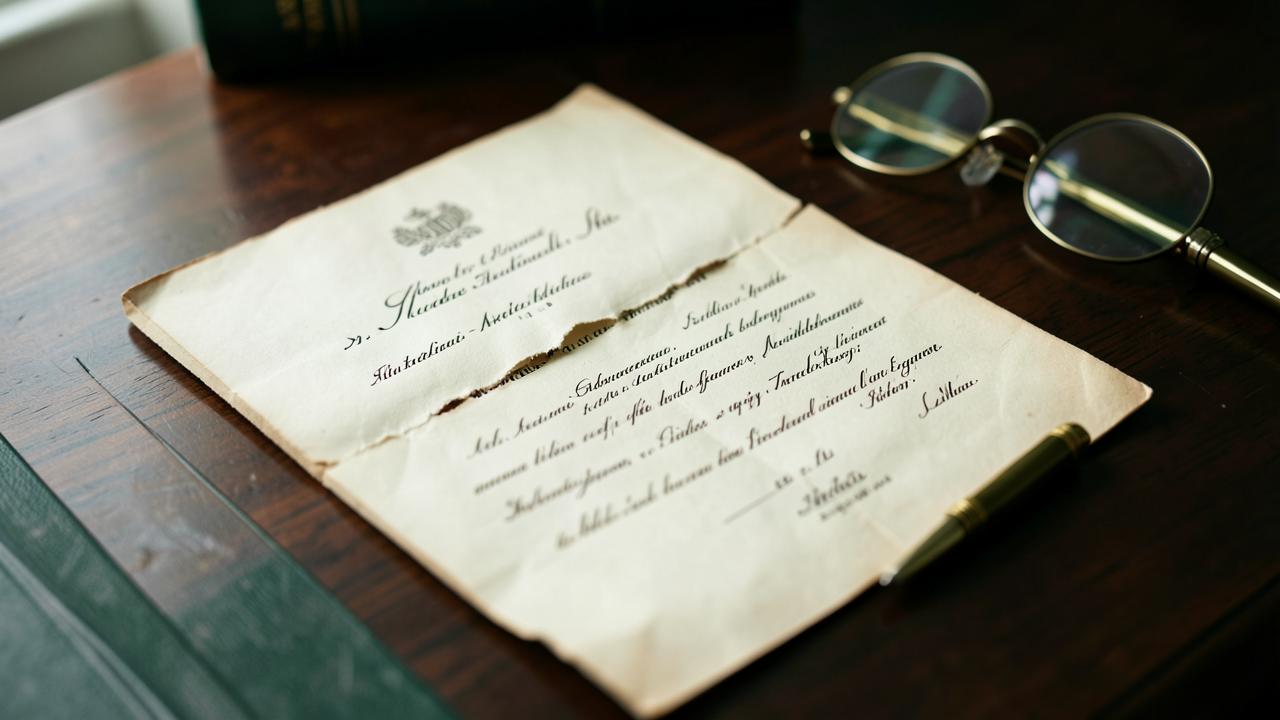
Srendarjit said they were again living together as a couple. Fiaz’s children said she lived elsewhere, at 19 Salt Hill Mansions, as his tenant. The documents appeared to support the children. Srendarjit’s answer was extraordinary: she said the documents were a false paper trail created by her and Fiaz to claim local-authority benefits fraudulently.
The court believed her account.
The relationship in one line
Long-term relationship → separation → disputed reconciliation → partner says “we lived together” → children say “she lived elsewhere” → documents support the children → partner says the documents were a false trail → 1975 Act claim.
The relationship
A couple, four children and two disputed addresses
- 1
Fiaz Ali Shah
Father of four. He died on 24 April 2020 after making his final will in 2018.
- 2
Srendarjit Kaur Jassal
Fiaz’s partner from around 2000. They never married, but their relationship became equivalent to marriage.
- 3
Sajad Shah
Fiaz’s son, executor and sole beneficiary under the 2018 will.
- 4
Shabana Shah
Fiaz’s daughter and co-executor under the 2018 will.
The central factual issue was whether Fiaz and Srendarjit had resumed living together at 12 Sussex Close, or whether she lived at 19 Salt Hill Mansions as his tenant.
The three wills
In August 2006, Fiaz left everything to Srendarjit, describing her as “my wife”. Four months later, a new will described her as “my close friend” and gave her 50% of the sale proceeds of a particular property; residue went to Sajad or, failing him, Shabana.
On 6 December 2018, Fiaz appointed Sajad and Shabana as executors and made Sajad the sole beneficiary. Srendarjit received nothing.
Simplified visual explainer
Three wills, one disappearing entitlement
- 1
August 2006 — Srendarjit receives everything
- 2
December 2006 — 50% of one property’s sale proceeds
- 3
2012 — separation
- 4
Relationship later resumes to a disputed extent
- 5
6 December 2018 — Sajad receives the estate; Srendarjit receives £0
- 6
2021 — qualifying cohabitation found
Death, probate and the claim
Fiaz died on 24 April 2020. Probate was granted on 7 July 2020, with the net estate stated at just under £1.4 million. Srendarjit issued her claim in January 2021, relying principally on section 1(1A) of the 1975 Act.
The documents said she lived elsewhere
Sajad and Shabana accepted that the relationship had resumed to some extent, but denied that Srendarjit had moved back to 12 Sussex Close. They relied on documents connecting her to 19 Salt Hill Mansions.
Srendarjit accepted those documents existed. Her case was that they did not reflect reality because she and Fiaz had created a false trail for benefits claims. At trial it was put to her that even that admission was fabricated because admitting a smaller fraud might assist a much larger inheritance claim. Deputy Master Marsh rejected that contention.
This was an admission and a civil finding of benefits fraud. This article does not suggest that Srendarjit was criminally convicted or prosecuted.
The paper trail may be evidence. It is not always the story.
The substantive trial in 2021
The four-day trial took place before Deputy Master Marsh. On 2 November 2021, he preferred Srendarjit’s evidence and found that during the relevant two years she and Fiaz had lived in the same household as if married. She therefore qualified for relief.
He awarded a 50% beneficial interest in 19 Salt Hill Mansions and a £385,000 lump sum. Of that lump sum, £200,000 was to be held back pending any claim or prosecution by the local authority or another relevant body arising from the admitted and found benefits fraud.
The £140,000 problem
The original £385,000 calculation included £140,000 for Srendarjit’s outstanding litigation costs. The Deputy Master later allowed £28,000 VAT on those costs, so the order referred to £403,000. That was not simply a £403,000 damages award: ordinary litigation costs had been incorporated into the substantive relief.
The 2024 appeal
Sajad and Shabana sought permission on seven grounds. Grounds 2–7 were refused. The only issue before James Pickering KC was whether the litigation costs had wrongly been included in the substantive award.
The finding that Srendarjit qualified for relief was not before the appeal court.
The appeal was allowed. The lump sum was reduced to exclude the £140,000 costs and £28,000 VAT. Costs were to be determined separately under CPR Part 44.
Because Srendarjit was “the clear winner” in the underlying proceedings, Sajad and Shabana were ordered to pay her costs of those proceedings, excluding the appeal, subject to detailed assessment on the standard basis if not agreed. The judge’s view that Srendarjit should pay the successful appellants’ appeal costs was expressly provisional; this article does not present it as a final assessed sum.
After Jassal
In Hirachand v Hirachand, the Supreme Court referred to Jassal and agreed that ordinary recoverable litigation costs belong in the CPR costs regime rather than the substantive 1975 Act award.
Could it have been mediated?
Potentially. If Srendarjit was believed, she qualified. If the defendants were believed, her principal route to eligibility was in serious difficulty. Mediation could have tested credibility, the documentary trail, the fraud admission, relationship evidence, housing and maintenance needs, estate value and likely costs.
The case had a binary factual issue. The settlement did not have to be binary.
Why costs make mediation especially relevant
The appeal judgment noted that the CPR costs regime encourages without-prejudice negotiation and settlement. Costs consequences, including those associated with formal offers, make the decision to reject settlement financially significant.
The estate was stated at just under £1.4 million. One side’s legal costs alone had reached £140,000 plus VAT. Costs are not a footnote to an inheritance war.
Who was Fiaz’s family when he died?
His final will said Sajad inherited and Srendarjit received nothing. The 1975 Act asked a different question: what was the reality of Fiaz and Srendarjit’s relationship in his final years? The answer depended not simply on a marriage certificate, address or will, but on how they were living.
The will said who should inherit. The court still had to decide who counted as family.
For the current law and reform debate, read inheritance rights of unmarried partners.
Related content
- Kaur v Singh
- Ilott v The Blue Cross
- McDaniel v Talbot
- Howe v Howe
- Deeds of Variation
- The Inheritance Wars hub
This article provides general commentary on Jassal v Shah & Anor [2024] EWHC 2214 (Ch), the underlying 2021 decision and inheritance disputes in England and Wales. It does not constitute legal advice.
Cases referred to & sources
The price of the war
Srendarjit’s litigation costs were put at £140,000 plus £28,000 VAT. The 2024 appeal held that ordinary costs had to be addressed separately under the CPR, not included in the substantive award. Her underlying costs were ordered against Sajad and Shabana, subject to detailed assessment if not agreed; no verified final total is stated.
What could a mediated settlement have looked like?
These are examples of settlement structures which mediation could have explored. They are not outcomes which actually occurred, and the legal, tax and practical consequences of any settlement require appropriate professional advice.
A secure interest in 19 Salt Hill Mansions
The parties could have explored ownership, occupation or sale terms for the property without requiring an all-or-nothing finding about cohabitation.
A maintenance lump sum
Housing and income needs could have been quantified and met by an agreed capital payment.
A structured payment
Part of any payment could have been retained or indemnified against potential local-authority consequences.
Costs and finality
A settlement could have allocated costs, included mutual releases and closed the estate without an appeal.
Inheritance Wars
Four questions
- What did the court have to decide?
- Whether Srendarjit and Fiaz had lived in the same household as if married during the two years before death, and later whether ordinary litigation costs could form part of substantive relief.
- What did the parties risk?
- A just-under-£1.4 million estate, a stark credibility contest, admitted benefits fraud and legal costs of £140,000 plus VAT before the later costs process.
- What could mediation have done differently?
- Mediation could have tested both addresses, the documents and the witnesses while building a package around property, maintenance, costs and potential third-party claims.
- What should families and advisers learn?
- Unmarried partners should document their living and financial arrangements, and litigation costs must be treated distinctly from substantive provision.
Inheritance Wars
Real cases. Real families. Real consequences.
The court can decide who is right. Mediation asks whether there is another way.
Is your dispute beginning to look like an inheritance war?
Inheritance disputes often become harder to resolve as costs increase, positions become entrenched and family relationships deteriorate.
Mediation provides an opportunity to explore settlement before the outcome is left entirely to the court.
ProMediate Inheritance, Probate & Trusts provides specialist mediation for disputes involving wills, estates, trusts, inheritance and family property.
Mediation is voluntary and confidential, subject to the mediation agreement and applicable legal exceptions. The mediator is neutral, does not decide who is right and does not provide legal advice. This article provides general information about mediation and the reported decisions referred to above. It does not constitute legal advice.
© 2026 ProMediate (UK) Limited. All rights reserved.
This article may not be reproduced, republished or substantially copied without the prior written permission of ProMediate (UK) Limited. Short quotations may be used for legitimate commentary or citation provided that ProMediate is clearly credited as the source.